

You begin making custom mold phone cases with a clear goal of providing high-quality OEM products. Each phone case starts with exact needs tailored to your customers. You pay attention to customization, ensuring that every detail meets their specifications. You pick materials that enhance durability and aesthetics. You follow strict quality checks throughout the production process. This process requires care at every step, and you watch the process from start to finish to ensure that it yields excellent results.
Careful planning and doing things right help your custom mold phone case OEM process succeed.
Key Takeaways
- Make sure you know what your client wants before you start. Collect clear details so the product matches what they expect.
- Pick materials that last long and look good. Polycarbonate and silicone can protect the phone and make it look nice.
- Use CAD software to build exact digital models. This lets you spot problems early in the design.
- Test the materials and prototypes carefully. Check if the cases are strong and fit the phones just right.
- Focus on making the mold well. A good mold helps you make phone cases that fit and protect the phone.
- Improve the injection molding process. Watch the temperature and pressure to stop mistakes in the product.
- Use strict quality control steps. Check the cases often while making them to find problems early and keep quality high.
- Pack your products with care for shipping. Good packaging keeps the cases safe and shows you care about quality.
OEM Requirements & Custom Design
When you start a custom mold phone case OEM project, you need to know what your client wants. You ask for lots of details so the cell phone cases turn out just right. This step is important for making a good custom product.
Gathering OEM Specs
Device Compatibility
You first check which devices the cell phone cases will fit. Your client gives you the model numbers and sizes. You look at every measurement to make sure there are no mistakes. This helps each case fit well and keep the device safe.
Branding Options
Your client may want their logo or a special design on the cases. You talk about branding choices like colors, where the logo goes, and different finishes. You might use a table to keep these options organized:
| Branding Option | Description |
|---|---|
| Logo Printing | Add company logo |
| Color Matching | Match brand colors |
| Texture Finish | Matte, gloss, or grip |
You help your client pick the best choices for their custom product.
Design Customization
CAD Modeling
You use CAD software to make a digital model of the phone case. The model shows all the details, like button holes and camera spots. You send the CAD files to your client so they can check them. This helps you find problems before you start making the cases.
Prototype Approval
You make a prototype using the CAD model. Your client looks at the sample and tells you what they think. You change things if needed. This back-and-forth makes sure the product is just right. You only start making lots of cases after your client says the prototype is good.
Tip: Ask your client to check everything during the prototype stage. Fixing things early saves time and money later.
You need to talk clearly with your client at every step. This helps you make great custom mold phone case OEM products. You build trust and make sure everything goes smoothly from start to finish.
Material Selection for Manufacturing
When you make custom mold phone cases for OEM orders, picking the right material is very important. The material you choose helps you give your client the quality, style, and protection they want. You need to think about how the material looks, feels, and works over time.
Material Options
There are many materials you can use for phone cases. Each one has its own good points for OEM projects.
Polycarbonate & Silicone
Polycarbonate is strong and does not break easily. It keeps phones safe from drops and scratches. Silicone is soft and bends easily. It makes the case easy to hold and not slippery. These materials are popular because they protect phones and look nice.
Leather & Specialty Materials
Leather makes the case look fancy and feel nice. It is a good choice for luxury phone cases. Some clients want special materials for different designs. You can use recycled plastic from old fishing nets to make eco-friendly cases. This helps you care about the planet and still meet OEM needs.
You can also use these common materials for custom phone cases:
- TPU
- Silicone
- Leather
Tip: Pick a material that matches your client’s brand and what they want for their product.
Material Testing
You have to check that your materials are good enough. Testing makes sure your phone cases last long and work well.
Durability Standards
You test the cases to see if they can handle being used every day. You want each case to stay strong against scratches, drops, and wearing out. You do many checks during production to keep the quality high.
Here is a table that shows some common ways to test OEM phone cases:
| Testing Method | Description |
|---|---|
| Raw Material Inspection | Check the color and shape of materials to match what the customer wants. |
| Lab Testing | Test what the materials are made of to make sure they are right. |
| Inspection at the Start of Production | Look at the first products to see if they are good before making a lot. |
| Inspection During Production | Check if everything is going right when you are 30-50% done making the cases. |
| Final Random Inspection | Do a last check before shipping to make sure the finished cases are good. |
You should always make sure your materials pass these tests. This helps your phone cases meet OEM rules for being strong and working well.
Note: Picking the right material and testing it carefully helps you stop problems and keeps your clients happy.
Mold Making for Custom Mold Phone Case OEM
You need to focus on making the mold when you start a custom mold phone case oem project. This step shapes the final look and fit of your cell phone cases. You must pay attention to every detail because the mold controls the quality and protection your cases provide.
Mold Base Creation
You begin by designing the mold base. This part holds all the pieces together during the manufacturing process. You want a strong and stable base so your mold lasts through many cycles of production. You check the size and shape to match your phone case design.
Steel Mold Materials
You choose steel for most custom mold phone case oem projects. Steel gives you strength and long life. It stands up to the high pressure and heat in manufacturing. You can use different types of steel, like P20 or H13, based on your budget and how many cases you plan to make. You want to pick a steel that resists wear and keeps its shape. This helps you make cell phone cases that fit well and give good protection.
Tip: Use high-quality steel for molds if you expect large production runs. This saves you money and time in the long run.
CNC Machining
You move to CNC machining after you finish the mold base. CNC stands for Computer Numerical Control. This process uses machines to cut and shape the steel with great accuracy. You program the machine to follow your design exactly.
Precision Steps
You need to check every step during CNC machining. The machine cuts out spaces for buttons, cameras, and ports. You measure each part to make sure it matches your CAD model. You look for smooth surfaces and sharp details. If you see any mistakes, you fix them right away. This careful work helps you avoid problems later in the production process.
- You check the mold for:
- Correct size and depth
- Smooth edges
- Clean corners
You want your mold to match your design so your custom mold phone case oem project meets your client’s needs.
Mold Validation
You must test the mold before you start full production. This step is called mold validation. You run a small batch of cases to see how the mold works. You look for any problems that could affect the final product.
Trial Runs
You watch for common issues during trial runs. Air traps can show up in certain spots. You might see flash, which looks like thin lines of extra material at the mold’s edge. Weld lines can appear where the material flows meet. You need to fix these problems to make sure your cases look good and give strong protection.
Here is a table that shows some common issues and how you can solve them:
| Issue | Description | Solution |
|---|---|---|
| Air Traps | Occur in specific areas during prototyping. | Better hot runner positioning, additional venting. |
| Flash | Small lines of material at the mold parting line after many cycles. | Manual removal with cutter/file, automated deburring for high volume, mold re-machining. |
| Weld Lines | Appear in complex geometries where material flows meet. | Post-injection polishing or injection point adjustment, mold re-machining if necessary. |
You need to solve these issues before you move to mass production. This step keeps your custom mold phone case oem project on track and ensures your cases meet high standards for protection and quality.
Note: Making the mold takes time and skill. You must check every detail to avoid mistakes. This careful process helps you deliver the best results for your clients.
You control the outcome of your manufacturing process by focusing on making the mold right. You set the stage for smooth production and strong, reliable phone cases.
Injection Molding Process
The injection molding process is very important for making phone cases for OEM orders. You need to know each step to make sure your phone cases fit well and last long. This process uses special machines and molds to shape materials like polycarbonate, TPU, and silicone into custom designs. You can make thousands of cases fast and keep the quality the same.
Machine Setup
You get your injection molding machines ready before you start. This helps every phone case come out right from the start. Here is how you set up your machines for plastic injection molding:
- Pick and prepare the material. You choose the type, like PC, TPU, or a mix, and dry it to get rid of water.
- Put the mold in the machine. You make sure the custom mold fits and lines up with your design.
- Set up the main steps. You adjust the machine for molding, melting, pressing, cooling, opening, and pushing out the case.
- Run a test. You look for problems and fix the settings.
- Start making lots of cases. You watch the process to keep the quality high.
Tip: Always check the mold before you start. If it is not lined up, every phone case can have problems.
You can see the main materials and what they are used for in this table:
| Material | Characteristics | Applicable Scenes |
|---|---|---|
| PC (Polycarbonate) | High transparency, impact resistance | Transparent hard case |
| TPU | Soft, drop-proof, easy to color | Soft/anti-slip case |
| ABS+PC hybrid | Strength and toughness | Functional thick shell |
| TPU+PC hybrid | Clear, drop-proof | Printed case |
How to Make a Phone Case with Injection Molding
You need to follow clear steps to make a phone case with plastic injection molding. This way, you can make strong cases that fit devices just right.
Material Injection
You start by putting the material into the machine. The machine heats the plastic until it melts. Then, it pushes the melted plastic into the mold with high pressure. This fills the mold and shows all the details of your design. You must watch the temperature and pressure closely. If they are wrong, you can get bubbles, bent cases, or weak spots.
Cooling & Ejection
After the mold is full, you let the material cool inside. Cooling is very important in this process. It helps the phone case keep its shape and stay strong. You need to make sure the cooling system works well. If it cools too fast or too slow, the case can bend or crack. When the case is cool, the machine opens the mold and pushes out the finished phone case. You check each case for problems before making the next one.
Note: Making phone cases with injection molding is not the same as making other plastic things. You use materials like TPU and silicone because they have special features. These materials help you make cool designs and perfect fits. You can also make many cases quickly to meet what people want.
Cycle Optimization
You want each cycle of plastic injection molding to be fast and good. Making the cycle better helps you stop mistakes and save time and money. Here are some ways to make your injection molding better:
- Watch the temperature. Good cooling stops bending and mistakes.
- Make cooling faster. Faster cooling means more cases in less time.
- Pick the best material. The right cooling keeps your phone cases strong.
- Look at the surface. Even cooling gives you smooth, nice cases.
- Keep the cooling system clean. A clean system stops clogs that slow you down.
You need to watch every part of the process. When you make your cycles better, you get better cases and fewer problems. This helps you learn how to make a phone case with plastic injection molding for OEM orders.
Callout: If you want to know how to make a phone case that is special, pay attention to every step of the injection molding process. Good setup, careful material injection, and smart cycle changes give you the best results.
Now you know how to make a phone case using plastic injection molding. By following these steps, you can make custom cases that your client will like and that last a long time.
Alternative Manufacturing Methods
When you make custom phone cases, you may want to explore other ways besides injection molding. Some projects need different tools or processes. You can use these alternative manufacturing methods to meet special needs or small orders.
Resin Casting Overview
Resin casting gives you a flexible way to create phone cases. You use a liquid resin and pour it into a mold. The resin hardens and takes the shape of the mold. This method works well for detailed designs or when you want to test a new idea.
Here is how you use resin casting for phone cases:
- Prepare your mold. You can use silicone molds for easy release.
- Mix the resin. Follow the instructions for the right ratio.
- Pour the resin into the mold. Make sure you fill all the spaces.
- Remove air bubbles. Tap the mold or use a vacuum chamber.
- Let the resin cure. This can take a few hours or overnight.
- Take the phone case out of the mold. Trim any extra resin.
Tip: You can add colors, glitter, or even small objects to the resin. This helps you create unique phone cases for your clients.
Resin casting does not need large machines. You can set up a small workspace and start making cases quickly. This method gives you more freedom to try new shapes and styles.
When to Use Alternatives
You should think about alternative methods when your project has special needs. Resin casting and other techniques work best in these situations:
- You have a small order or need a few samples.
- You want to test a new design before mass production.
- You need custom effects, like clear or glow-in-the-dark cases.
- You want to avoid the high cost of making steel molds.
Here is a table to help you decide when to use each method:
| Method | Best For | Limitations |
|---|---|---|
| Injection Molding | Large orders, fast production | High setup cost, less flexible |
| Resin Casting | Small runs, custom designs | Slower, less durable |
Note: You should always match the manufacturing method to your client’s needs. If you want fast, large-scale production, injection molding works best. If you want flexibility or special effects, resin casting gives you more options.
You can choose the right process for every project. This helps you deliver the best results and keep your clients happy.
Post-Processing & Assembly
When you finish molding your custom phone cases, you start post-processing and assembly. This step helps your cases look neat and meet OEM rules. You work on taking off extra material, making the surface nice, and putting on extra parts.
Trimming & Deflashing
First, you take the phone case out of the mold. The case needs trimming so it matches your design. You can cut by hand or use CNC machines for more accuracy. You get rid of extra plastic, sprue bits, and smooth out gates with a hot cutter. This makes the phone case edges neat and stops sharp spots.
Here is a table that shows the main steps for trimming and deflashing:
| Step | Description |
|---|---|
| Ejection | Take the finished phone case out of the mold after it cools. |
| Trimming | Cut the case to the right shape by hand or with CNC machines. |
For big orders, you can use robots. Robots cut off extra plastic fast and make every case the same. You check each case after trimming to see if it meets your quality rules.
Tip: Careful trimming and deflashing stop problems and make your phone cases feel better.
Surface Finishing
You want your phone cases to look nice and feel smooth. Surface finishing makes your cases better and helps match your client’s brand.
Painting & Printing
You can paint your phone cases to get the right color or cool effects. You use spray booths to cover the case evenly. You can pick matte, shiny, or textured finishes. Printing lets you put on logos, patterns, or special art. You use UV printing or pad printing for clear details and bright colors.
- Painting gives a smooth, strong surface.
- Printing adds logos and designs.
You look at the finish for scratches, bubbles, or wrong colors. You fix any problems before you start assembly.
Note: Good surface finishing makes your phone cases look great and keeps your clients happy.
Assembly Steps
After finishing, you put on extra parts. You add buttons, camera rings, or kickstands if your design needs them. You use simple tools or machines for this job. You check that every part fits well and works right.
You follow these steps for assembly:
- Gather all finished phone cases and extra parts.
- Attach each part the way your design says.
- Check the finished case to see if it fits and works.
- Pack the cases for the next step.
You keep your assembly area clean and tidy. This helps you stop mistakes and work faster.
Callout: Careful post-processing and assembly make sure your custom phone cases meet OEM rules for quality and looks.
By focusing on these steps, you control how your phone cases look and feel. You give your clients what they want and build trust for more orders.
Quality Control & Packaging
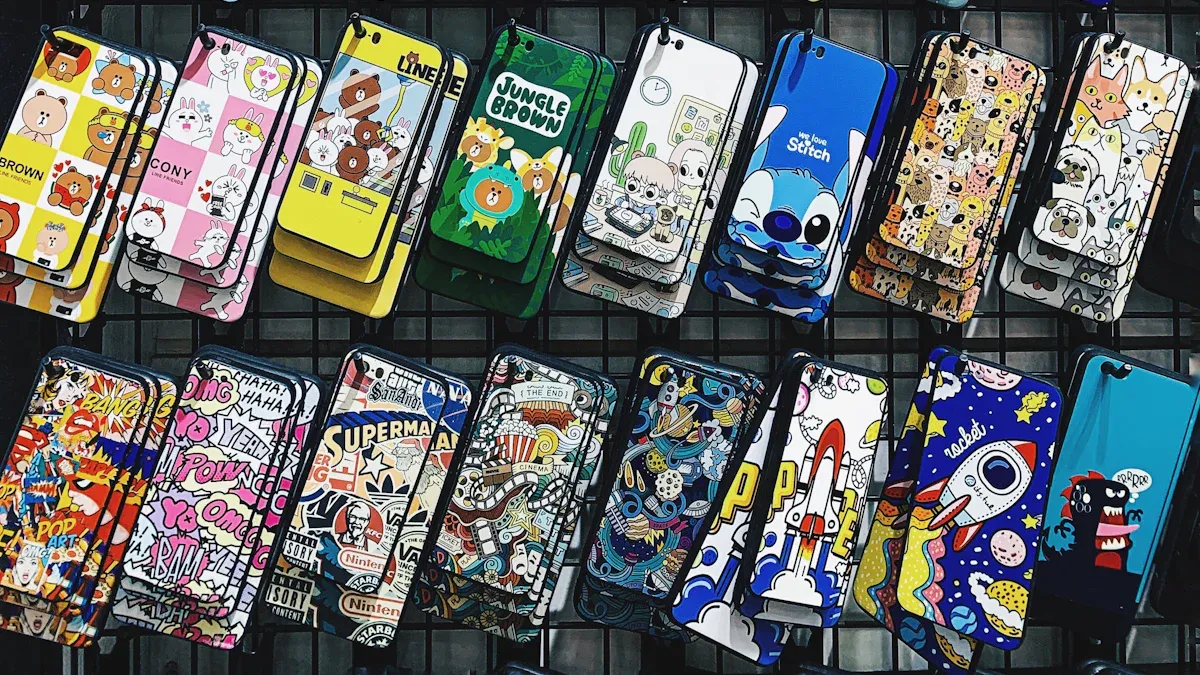
You need strong quality control to deliver high-quality phone cases for OEM clients. Each step in the manufacturing process helps you catch problems early and keep your cell phone cases consistent. You want every case to meet strict standards for fit, finish, and protection.
In-Process Checks
You check your cell phone cases during every stage of production. You look for defects as soon as you take the cases out of the mold. You measure the size and shape to make sure each case matches your CAD design. You also check the surface for marks or rough spots. If you find a problem, you stop the process and fix it before making more cases. This helps you avoid waste and keeps your production line running smoothly.
Tip: Use a checklist for each step. This helps you track every detail and catch mistakes early.
Final Inspection
You do a final inspection before you pack your cell phone cases. You look at each case under good light. You check the color, logo, and finish. You make sure the mold details are sharp and clean. You also test the fit on real devices to confirm that your protective phone cases work as planned.
Functional Testing
You test your cell phone cases to make sure they protect the device. You drop test the cases from different heights. You check that the buttons and ports work with the case on. You also bend and twist the cases to see if they hold their shape. These tests help you prove that your high-quality phone cases meet OEM standards for durability and safety.
Here is a table of common functional tests:
| Test Type | Purpose |
|---|---|
| Drop Test | Checks shock protection |
| Fit Test | Confirms proper fit on device |
| Flex Test | Tests strength and flexibility |
| Button/Port Test | Ensures access and usability |
Packaging for OEM Delivery
You pack your cell phone cases to keep them safe during shipping. You use trays or bags to stop scratches. You add foam or bubble wrap for extra protection. You label each box with the model, color, and order number. You include documents that show the cases passed all quality checks. For large orders, you follow OEM rules for packaging and shipping. You may need to add barcodes or special labels for tracking.
Note: Good packaging protects your high-quality phone cases and shows your commitment to quality.
You finish your manufacturing process by making sure every box is ready for delivery. You keep records of each order to help with compliance and future orders. This careful approach helps you build trust with your OEM clients and keeps your production on track.
You now know how custom mold phone case OEM manufacturing works from start to finish. Every step, like design and packaging, helps make your product special and good quality. It is important to talk clearly, pick the right materials, and check quality often. Work closely with others by sharing your ideas and listening to feedback. Follow these steps to make sure you give your clients strong and unique phone cases for every OEM project.
FAQ
How long does it take to make a custom mold for phone cases?
You usually need 2 to 4 weeks to make a custom mold. The time depends on the design complexity and the number of revisions you request.
What materials work best for OEM phone cases?
You can choose polycarbonate, TPU, silicone, or leather. Each material offers different levels of protection, style, and feel. Your choice should match your brand and customer needs.
Can you add a company logo to every phone case?
Yes, you can add your logo using printing, embossing, or engraving. You decide the size, color, and placement during the design stage.
What is the minimum order quantity for OEM phone cases?
Most factories set a minimum order quantity (MOQ). You often see MOQs between 500 and 1,000 pieces per model or color.
How do you make sure each phone case fits the device?
You use CAD models and real device samples to check every detail. You test prototypes and adjust the mold until you get a perfect fit.
What quality checks do you perform before shipping?
You check size, color, logo, and fit. You also run drop tests and inspect the surface. You pack only the cases that pass all tests.
Can you make eco-friendly phone cases for OEM orders?
Yes, you can use recycled plastics or biodegradable materials. You discuss these options with your supplier during the material selection stage.


 English
 Arabic
 Chinese (Simplified)
 Dutch
Dutch French
 German
 Italian
 Portuguese
 Russian
 Spanish