

What Should You Know About Phone Case Materials in 2026
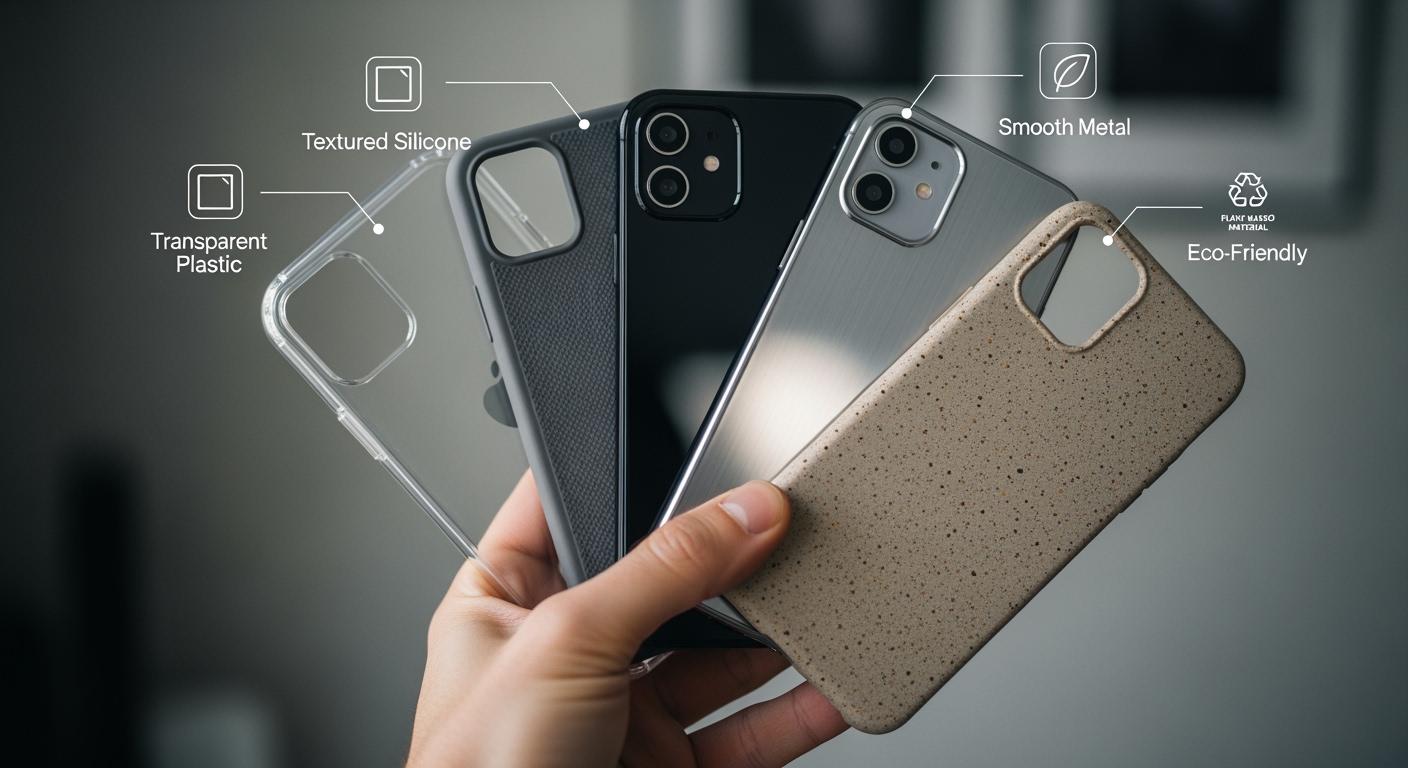
When I look at phone cases in 2026, I notice that most are still made from plastic material, such as TPU and polycarbonate. I also see more people choosing advanced composite material and metal phone case options for added strength or a stylish appearance. The most important thing is how well each material in a phone case protects your device, feels in your hand, and fits your lifestyle. I always make sure the material of a phone case keeps my phone safe, looks appealing to me, and stays within my budget. Understanding the pros and cons of each material and phone case option helps me pick the best one.
Key Takeaways
- Pick a phone case material for protection, style, and comfort. TPU and polycarbonate protect your phone well. Silicone cases feel soft and are easy to hold.
- Eco-friendly cases use biodegradable or recycled materials. These cases help cut down on waste. Choose them if you want to help the planet.
- Advanced composites like AIREX® foams are light and strong. They keep your phone safe and are easy to carry.
- The price depends on the material. Silicone and plastic cases cost less money. Leather and metal cases look nice and last longer, but cost more.
- Always look at the protection score of a case. Carbon fiber cases keep your phone safest. Wood and fabric cases look cool but protect less.
Common Phone Case Materials
TPU (Thermoplastic Polyurethane)
TPU is in many phone cases. This material bends easily and takes in shocks. It does not break when you bend it. TPU is popular because it keeps phones safe from drops.
I pick TPU if I want a soft case that grips well and fits tight.
Polycarbonate (PC)
Polycarbonate is also used for phone cases. It feels harder and does not bend much. PC cases look thin and smooth. They keep phones safe from scratches and small hits.
Here is a table that shows how TPU and PC compare:
| Material | Flexibility | Shock Absorption | Rigidness | Popularity |
|---|---|---|---|---|
| TPU | More flexible | Good | Less rigid | High |
| PC | Less flexible | Moderate | More rigid | Moderate |
Silicone
Silicone feels soft and smooth to touch. It grips my hand and stops my phone from slipping. Silicone cases protect phones from small drops. They come in bright colors and cool designs.
Leather & Synthetic Leather
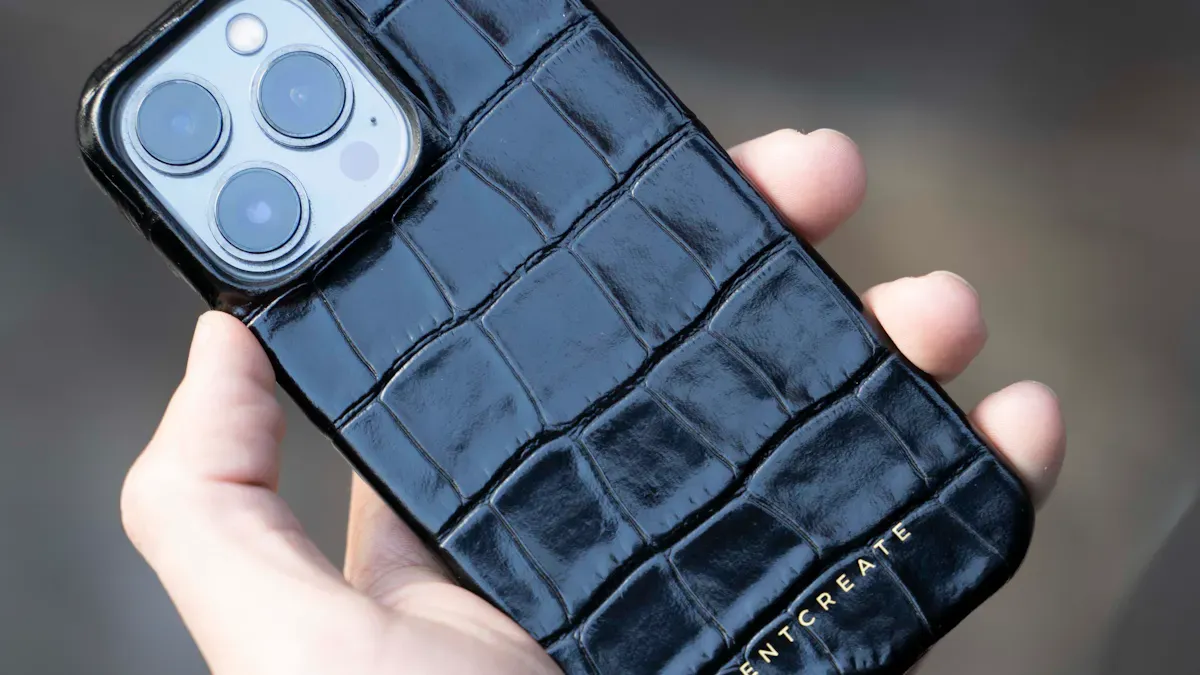
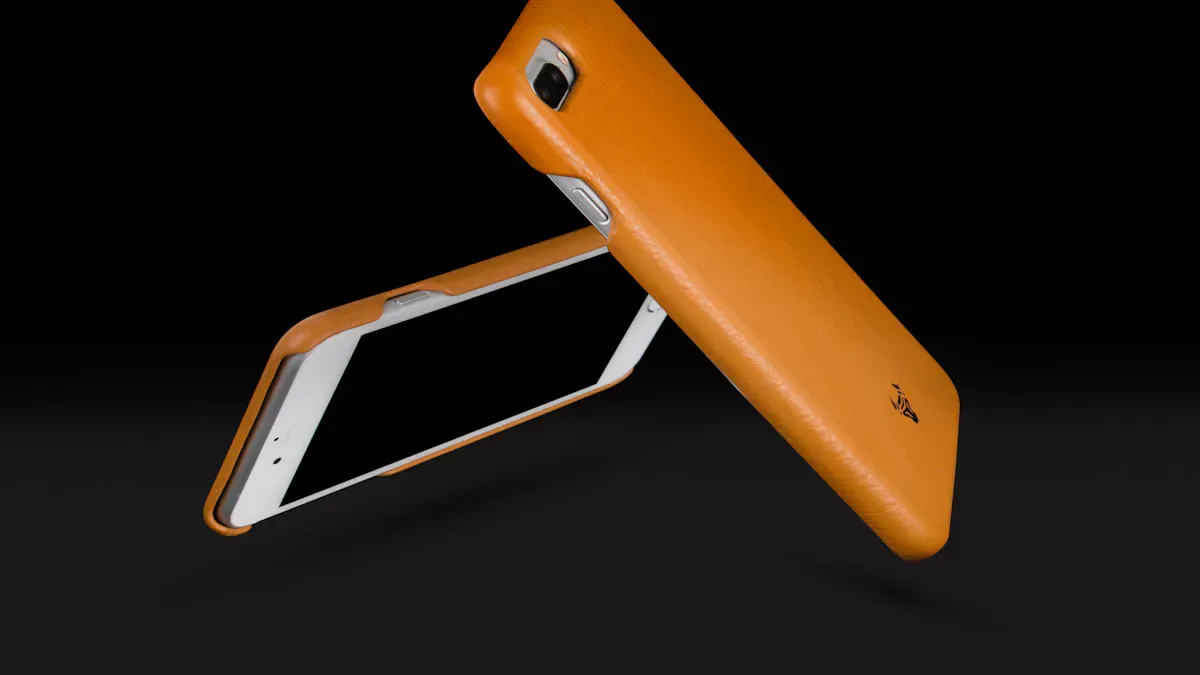
Leather phone cases look nice and feel fancy. They get a special look as they get older. Synthetic leather feels like real leather but costs less. Both make a phone case look classy.
Metal (Aluminum)
Metal cases, like aluminum, look strong and modern. They keep phones safe from scratches and dents. Metal cases feel cool and tough but can be heavy.
Fabric & Wood
Fabric cases feel soft and nice to hold. Wood cases look natural and different. These materials help my phone stand out. They give some protection and style.
Biodegradable & Eco-Friendly Materials
Eco-friendly cases use materials that break down over time. More brands now sell cases made from plant fibers or recycled plastic. These cases help cut down on waste and protect nature.
Advanced Composites
In 2026, I see new materials like AIREX® foams and BALTEK® balsa in phone cases. These composites are light but strong and last long. Here is a table that shows what makes them special:
| Material | Description |
|---|---|
| AIREX® foams | Made for light but tough uses, giving strong support and good performance. |
| BALTEK® balsa | Very stiff but light, comes from good sources and helps take in CO₂. |
I see more people picking advanced composites for better protection and lighter phone cases.
Material Pros & Cons
TPU – Pros & Cons
I pick TPU when I want a tough phone case. This material bends but does not break. TPU keeps my phone safe from drops. It does not get oily or greasy. Clear TPU cases stay see-through for a long time. I can put them on and take them off easily.
*Pros:*
- Flexible and strong
- Takes in shocks well
- Does not get oily or greasy
- Stays clear if see-through
- Simple to put on and take off
Cons:
- Can turn yellow as it gets old
- Might not feel as fancy as other materials
Polycarbonate – Pros & Cons
Polycarbonate makes my phone case hard and stiff. It keeps my phone safe from scratches and small bumps. PC cases look thin and smooth. They are light to hold. But they do not stop shocks as well as TPU.
Pros:
- Hard and stiff
- Stops scratches
- Light to carry
- Looks smooth
Cons:
- Does not stop shocks well
- Can break if hit hard
- Might feel slippery
Silicone – Pros & Cons
Silicone feels soft and smooth in my hand. I use silicone when I want a case that grips well. It comes in bright colors. Silicone keeps my phone safe from small drops. But it picks up dust and lint.
Pros:
- Soft and comfy
- Good grip
- Bright colors
- Stops small drops
Cons:
- Gets dusty and dirty
- Can stretch out after a while
- Might not stop big drops
Leather – Pros & Cons
I choose leather when I want my case to look nice. Leather gets a cool look as it gets older. It feels good to hold but needs care. Synthetic leather looks like real leather and lasts longer.
| Feature | Leather Cases | Synthetic Leather Cases |
|---|---|---|
| Appearance | Looks fancy and professional | Looks stylish but not as fancy |
| Durability | Gets a special look, not as tough | Lasts longer, costs less |
| Maintenance | Needs more care | Easy to take care of |
| Price | Costs more | Cheaper |
| Shock Absorption | Not as good as silicone | Usually better than real leather |
Leather Cases:
- Pros:
- Looks fancy
- Gets a cool look over time
- Feels nice to hold
- Cons:
- Costs more money
- Needs care
- Does not stop shocks well
Synthetic Leather Cases:
- Pros:
- Costs less
- Lasts longer
- Cons:
- Does not feel as fancy
Metal – Pros & Cons
Metal cases, like aluminum, make my phone look modern. This material keeps my phone safe from drops and scratches. Metal cases feel cool but can be heavy and slippery. Sometimes, metal stops my phone signal.
| Pros | Cons |
|---|---|
| Tough. Keeps your phone safe from drops | Can block your phone signal |
| Looks modern and cool | Costs more than other cases |
| Can be slippery and hard to hold |
Fabric/Wood – Pros & Cons
Fabric and wood cases help my phone stand out. Fabric feels soft and wood looks natural. These cases give style and some safety. Wood can crack and fabric can get dirty.
Pros:
- Looks special
- Feels nice to hold
- Not heavy
- Good for the planet
Cons:
- Not as safe as plastic or metal
- Fabric can get stains
- Wood can break or chip
Eco-Friendly – Pros & Cons
Eco-friendly cases help protect the earth. Brands use compostable, recycled, or plant-based stuff. These cases break down and make less trash. Some cost more but keep phones safe from drops.
| Brand | Key Features | Environmental Impact | Price Range |
|---|---|---|---|
| Pela Case | Breaks down, 6ft drop protection | Breaks down in 2 years | $45-65 |
| Summer Waves | Bioplastic & bamboo, 5ft drop protection | No plastic waste | $33-40 |
| Nimble Disc | Made from old CDs, 6ft drop protection | Free recycling program | $40-45 |
I was happy to find out my Pela Case is safe and has no BPA, phthalates, or heavy metals. The cases are certified to break down in the U.S. and take six months to two years to disappear.
Pros:
- Helps the planet
- Safe materials
- Good drop safety
Cons:
- Costs more
- Not many colors or styles
- Might not last as long as plastic or metal
Advanced Composites – Pros & Cons
Advanced composites, like AIREX foams and BALTEK balsa, make my case light and strong. These materials give better safety and are good for the planet. They cost more but work really well.
Pros:
- Not heavy
- Strong and lasts long
- Takes in shocks well
- Good for the earth
Cons:
- Costs more
- Not easy to find
- Not many style choices
Material Comparison for Phone Cases
Protection & Durability
I check how well a phone case protects my phone. Some materials are better than others. Carbon fiber cases protect the most. Lab tests show they get five stars for safety. Polycarbonate and TPU also protect well, but not as much as carbon fiber. Metal cases are strong and stop scratches. But metal can dent if dropped hard. Leather and wood look nice but do not protect as well as plastic or advanced composites.
| Material | Protection Score (★) | Notes |
|---|---|---|
| Carbon Fiber | ★★★★★ | Best for drops and impacts |
| Polycarbonate | ★★★★ | Good for scratches and small bumps |
| TPU | ★★★★ | Good shock absorption |
| Metal | ★★★★ | Strong, but can dent |
| Silicone | ★★★ | Soft, good for small drops |
| Leather | ★★ | Stylish, less protective |
| Wood | ★★ | Unique, not for heavy drops |
I pick a phone case with a high protection score if I drop my phone often.
Appearance & Style
I want my phone to look nice, so I check the style of each case. Carbon fiber cases look modern and never go out of style. Wood cases stand out because each one is different. Metal cases look shiny and sleek. Leather cases look classy and professional. They get better as they age. Synthetic leather also looks elegant. Silicone and plastic cases are common, but they do not look as fancy. Plastic and silicone come in many colors and designs. Leather and carbon fiber have fewer color choices.
| Material | Aesthetic Appeal | Notes |
|---|---|---|
| Carbon Fiber | Highly rated | Timeless, modern pattern |
| Wood | Unique, eco-friendly | Smooth feel, stylish, less protective |
| Metal | Good ratings | Durable, stylish, many finishes |
| Leather | Classy, professional | Soft feel, improves with age |
| Synthetic | Elegant | Stylish, more color options |
| Silicone | Less stylish | Many colors, basic look |
| Plastic | Less stylish | Many colors, not fashionable |
I choose a phone case material that matches my style and feels good.
Grip & Comfort
Grip is important because I do not want my phone to slip. Silicone cases give the best grip and feel soft. They come in many colors and are easy to hold. Some brands, like dBrand, make cases with extreme grip textures. Plastic and metal cases can feel slippery. Leather feels nice but can get smooth over time. Wood and fabric cases feel warm and unique. Wood can be hard to hold if polished.
| Material | Grip & Comfort Pros | Cons |
|---|---|---|
| Silicone | Soft, prevents slipping, comfy | Attracts lint, can get sticky |
| dBrand Grip Case | Extreme grip, customizable, slim | Costs more |
| Leather | Soft, comfortable | Can get smooth, less grip |
| Plastic | Light, easy to hold | Can be slippery |
| Metal | Cool, solid feel | Slippery, heavy |
| Wood | Warm, unique feel | Can be hard to grip |
- Silicone: Many colors, great grip.
- Leather: Feels premium, fewer colors.
- Plastic: Many colors, basic grip.
- Carbon fiber: Modern look, usually black, smooth texture.
Eco-Friendliness
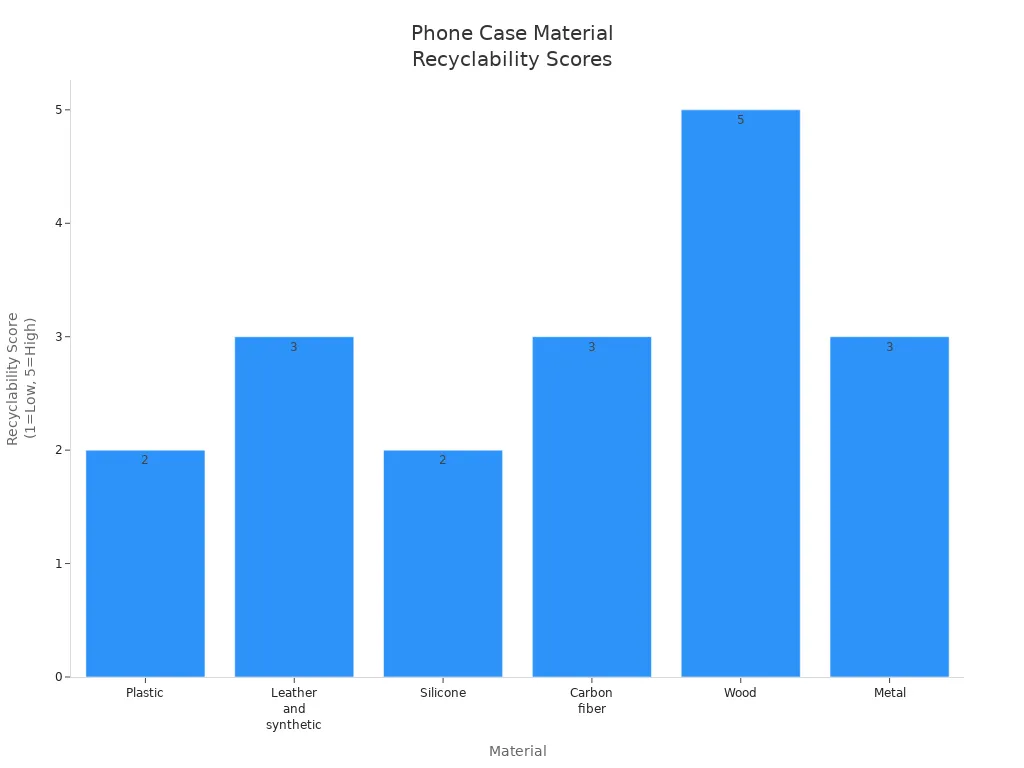
I care about the planet, so I look for cases that are easy to recycle or break down. Wood cases are the most eco-friendly. They are biodegradable and come from renewable sources. Pela Case and other compostable cases use plant-based materials. They help cut down on waste. Plastic and silicone are harder to recycle. They last a long time in landfills. Leather and synthetic leather use a lot of resources to make. Metal and carbon fiber can be recycled. Making them uses a lot of energy.
| Material | Recyclability Score (★) | Environmental Impact Description |
|---|---|---|
| Wood | ★★★★★ | Highly sustainable and biodegradable |
| Leather/Synthetic | ★★★ | Moderate recyclability, resource-intensive |
| Metal | ★★★ | Recyclable, energy-intensive to produce |
| Carbon Fiber | ★★★ | Moderate recyclability, resource-heavy |
| Plastic | ★★ | Low recyclability, high environmental footprint |
| Silicone | ★★ | Limited recyclability, contributes to waste |
I pick a biodegradable or recycled phone case when I want to help the planet.
Price & Value
Price matters when I buy a new case. Silicone and plastic cases cost less and are easy to find. Leather, metal, and carbon fiber cases cost more. They last longer and look better. Wood and eco-friendly cases can cost more because they use special materials. I check if the case gives good value for the price. Sometimes, paying more means better protection or style.
| Material | Price Range | Value for Money |
|---|---|---|
| Silicone | $10 – $25 | Affordable, basic protection |
| Plastic | $10 – $30 | Cheap, many styles |
| Leather | $30 – $70 | Expensive, stylish, ages well |
| Metal | $30 – $80 | Expensive, strong, stylish |
| Carbon Fiber | $40 – $100 | High price, best protection |
| Wood | $25 – $60 | Mid to high, unique look |
| Eco-Friendly | $30 – $65 | Higher price, helps the planet |
I balance price, protection, and style before I pick a phone case.
When I pick a phone case in 2026, I think about what is most important to me. I decide if I want my phone to be safer, look cool, or help the planet. Here is a simple chart:
| Material | Pros | Cons |
|---|---|---|
| Hard Plastic | Strong, not expensive | Slippery, not much grip |
| Silicone | Easy to hold, light | Gets dusty easily |
| Rubber | Absorbs shocks well | Not many colors to pick from |
| Wood | Looks nice, good for earth | Not very safe, can break |
I notice more people like advanced composites and eco-friendly cases now. I always think about what I want today and what I might care about later when I choose a phone case material.
FAQ
What phone case material protects my phone best?
I find that advanced composites and carbon fiber give the best protection. These materials absorb shocks and resist cracks. I trust them when I want my phone to survive big drops.
What makes a phone case eco-friendly?
Eco-friendly cases use plant-based, recycled, or biodegradable materials. I choose these when I want to help the planet and reduce waste. They break down faster than regular plastic.
What phone case material feels best in my hand?
I like silicone and leather for comfort. Silicone feels soft and grippy. Leather feels smooth and warm. Both make my phone easy to hold.
What should I look for if I want a stylish phone case?
I look for wood, metal, or leather cases when I want style. These materials stand out and look unique. They also come in many finishes and colors.
What is the most affordable phone case material?
Plastic and silicone cases cost the least. I pick these when I want to save money but still protect my phone. They come in many colors and designs.


 English
 Arabic
 Chinese (Simplified)
 Dutch
Dutch French
 German
 Italian
 Portuguese
 Russian
 Spanish