

Top Strategies to Prevent Counterfeit Phone Cases in 2026
Last year, I learned that more than 20 industries in the U.S. urgently requested help to stop fake phone cases. They said counterfeit products now hurt new ideas and fair business, and also pose risks to national safety. I understand how serious this problem is now. To stop fake phone cases, I use many steps. I rely on technology, legal action, and teaching buyers what to watch for. The wholesale trend in phone case sales shows we need new answers each year.
Key Takeaways
- Counterfeit phone cases are a big problem. Learn about new tricks used by counterfeiters to keep your brand safe.
- Use technology like NFC tags and QR codes. These help customers check if phone cases are real.
- Teach your team often to find fake products. Knowing how to spot fakes helps stop losses.
- Show customers ways to tell if phone cases are real. Smart buyers will not buy fake cases.
- Add strong security features like tamper seals and holographic labels. These make it harder for counterfeiters.
- Watch online stores and social media for fake listings. Acting fast can stop more harm.
- Work with law enforcement and use legal rules to fight counterfeiting.
- Check and change your anti-counterfeit plans often. Changing your plan helps you fight fakes better.
Counterfeiting Threats in 2026
Evolving Tactics
I see counterfeiters getting smarter every year. They do not use the same tricks as before. Now, they use new ways to hide fake phone cases. I have noticed some of these methods:
- Surface sanding: Counterfeiters smooth out marks or logos to make fakes look real.
- Acid washes: They use chemicals to erase signs that show a case is not original.
- Digital printing: This lets them copy designs and logos with high detail.
These methods change fast. I have learned that counterfeiters do not stop. They keep finding new ways to trick people. I must stay alert and watch for new tactics. If I use the same checks every year, I will fall behind. I update my strategies often. I talk with other people in the phone case business. We share what we see and learn from each other.
I also use technology to help me. I scan for new types of fakes. I test cases with different tools. I know that if I do not change my plan, counterfeiters will find a way around it. I make sure to review my steps every few months. This helps me stay ahead.
Tip: I always check for news about new counterfeiting tricks. This helps me protect my business and my customers.
Detection Challenges
Finding fake phone cases is not easy. I face many problems when I try to spot them. Some fakes look almost the same as the real ones. The new methods make it hard to tell the difference. I have seen cases where even experts get fooled.
I use special tools to check for hidden signs. Sometimes, I scan QR codes or look for microtext. Other times, I check the packaging for tamper seals or holographic labels. Even with these tools, I know that counterfeiters can copy many features.
I train my team to look for small clues. We practice spotting fakes together. I also ask customers to tell me if they see something strange. I believe that working together makes us stronger.
I know that detection will get harder in the future. Counterfeiters will keep changing their tricks. I must keep learning and updating my checks. If I do this, I can protect my brand and my customers.
Impact of Counterfeits
Brand Reputation
I know that brand reputation means everything in the phone case business. When people trust my brand, they buy from me again. If they see fake cases with my logo, they start to doubt my products. I have seen how one bad experience can make a customer walk away for good.
A recent survey showed how much people care about brands and trust. I want to share some numbers that stood out to me:
| Statistic | Percentage |
|---|---|
| Consumers who find brand important for online purchases | 76% |
| Consumers who lost trust after purchasing counterfeit goods | 66% |
| Consumers likely to lose trust if counterfeits are easily available | 65% |
| Consumers less likely to buy from brands associated with counterfeits | 76% |
| Consumers less likely to buy from brand websites associated with counterfeits | 34% |
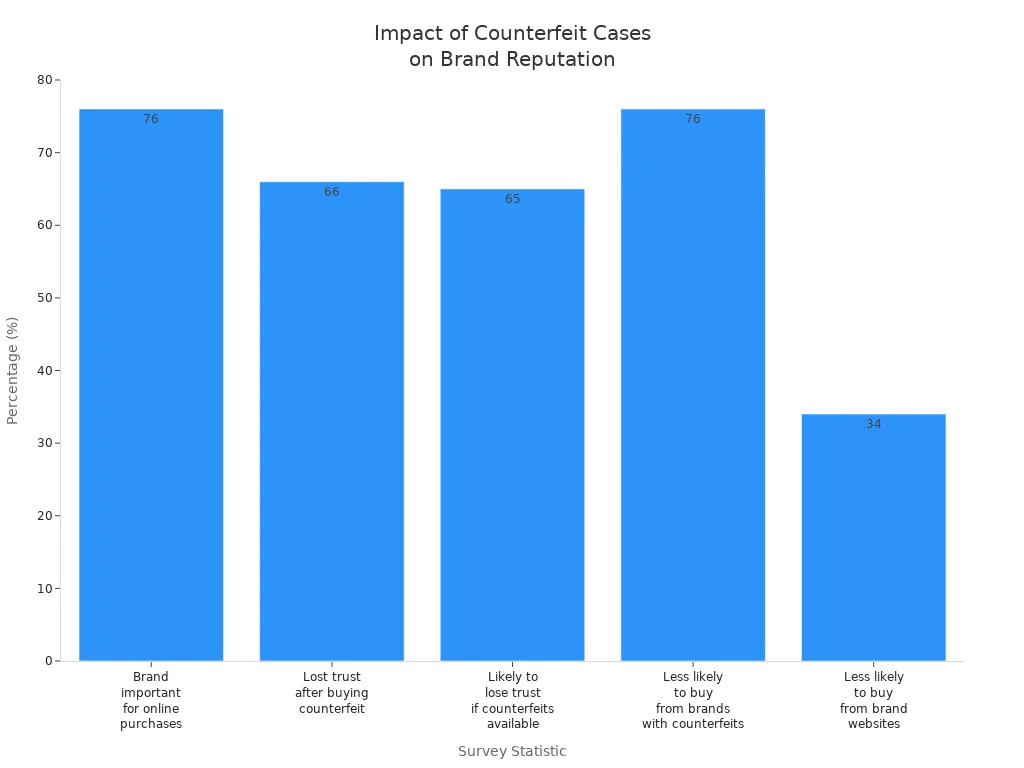
These numbers tell me that most buyers care about the brand. If they find a fake, they lose trust. I have learned that even one fake case can hurt my reputation. I must protect my brand every day.
Financial Losses
Counterfeit phone cases do not just hurt my name. They also cost me money. When fakes show up in the market, I lose sales. Customers buy the cheaper fake instead of my real product. I have seen my profits drop when counterfeiters flood online stores.
I spend more money to fight these fakes. I pay for new security features and legal help. I also spend time training my team to spot and report counterfeits. These costs add up fast. I know that if I do not act, I will lose even more.
I have talked with other business owners. Many of them say the same thing. Counterfeits make it hard to grow. They force us to lower prices or offer discounts. This hurts the whole industry.
Note: I always check my sales numbers and watch for sudden drops. This helps me spot when fakes might be stealing my customers.
Consumer Safety
I care about my customers’ safety. Fake phone cases can put people at risk. I have read reports about counterfeit products causing harm. Some fake cases break easily. Others use unsafe materials.
Here are some risks I have seen with counterfeit phone cases:
- Poor performance compared to real cases
- Cases that break and expose sharp edges
- Materials that cause skin irritation
- Cases that do not protect phones from drops
Counterfeit goods can also lead to bigger problems:
- Fire and electric shock risks from poor-quality electronics
- Choking hazards if small parts come loose
- General risks from unsafe products sold online
I always remind my customers to buy from trusted sources. I want them to stay safe and get the quality they expect.
Case Studies
I want to share some real stories that show how counterfeit phone cases can hurt brands and customers. These examples help me understand why I must stay alert.
Case 1: The Popular Brand That Lost Trust
Last year, I read about a well-known phone case brand. Many people loved their cases for strong protection and cool designs. One day, customers started to complain. They said their new cases broke after a few days. Some even showed pictures of cracked cases and scratched phones.
The brand checked the cases and found out they were fake. Counterfeiters had copied the logo and packaging. The fakes looked almost the same as the real ones. Many customers could not tell the difference. The brand lost trust. Sales dropped by 20% in just two months. I learned that even a few fakes can cause big problems.
Note: I always remind myself that one bad case can make many customers walk away.
Case 2: Safety Risks for Kids
I remember a story from a parent who bought a phone case for their child. The case looked fun and colorful. After a week, the child got a rash on their hands. The parent took the case to a lab. The test showed the plastic had unsafe chemicals. The case was a fake.
The parent warned others online. The story spread fast. Many parents became scared to buy cases from unknown sellers. I saw how counterfeits can hurt people, not just brands.
Case 3: Online Marketplaces and Fake Reviews
I have seen fake cases sold on big online stores. Sometimes, sellers use fake reviews to trick buyers. One time, a friend bought a case with many five-star reviews. The case broke after one drop. When my friend checked again, the seller had changed their name and started selling new fakes.
I learned that online markets can be risky. I always check for signs of fakes, like low prices or strange reviews.
Key Lessons I Learned:
- Counterfeits can damage a brand’s name and sales.
- Fake cases can put people’s health at risk.
- Online stores are not always safe.
- Customers need to know how to spot fakes.
These stories remind me to stay careful. I use them to teach my team and my customers. Real examples help everyone see why fighting counterfeits matters.
Physical Security Features

I have learned that strong physical security features help me stop counterfeit phone cases. These features make it hard for fakes to enter the market. I use several methods to protect my products and my customers.
Packaging Solutions
I always pay close attention to packaging. Good packaging does more than look nice. It protects my brand and shows customers that my cases are real.
Tamper Seals
I use tamper-evident seals on my phone case boxes. These seals show if someone has tried to open the package before it reaches the customer. I like tamper seals because they give clear signs of tampering. If someone tries to open the box, the seal breaks or changes color. This makes it easy for me and my customers to spot problems.
- Tamper-evident packaging gives visible signs if someone tampers with the product.
- This packaging makes it harder for counterfeiters to copy or sell fake cases.
- Seals and labels that show tampering also make it tough to remove the case without damaging the box. This keeps my product safe and protects my brand.
I always tell my customers to check the seal before opening their new case. If the seal looks broken, I ask them to contact me right away.
Holographic Labels
I add holographic labels to my packaging. These labels shine with different colors when you move them. Counterfeiters find it hard to copy these labels because they need special machines. I choose holographic labels with unique patterns or my brand logo. This helps customers spot real cases quickly.
I have seen that holographic labels build trust. Customers know they have a real product when they see the label. I also check the label myself before I ship any order.
Serial Numbers & QR Codes
I print a unique serial number on every phone case I sell. I also add a QR code next to the number. These codes help me track each case from the factory to the customer. When I scan the QR code, I can see where the case came from and where it is going.
I teach my customers how to use their phones to scan the QR code. If the code does not match my records, I know the case is fake. This system helps me stop counterfeiters and protect my buyers.
I also use serial numbers to check for returns or warranty claims. If someone tries to return a fake case, I can spot it right away.
Microtext & Invisible Ink
I use microtext and invisible ink to add secret marks to my phone cases. Microtext is tiny writing that you can only see with a magnifying glass. I print my brand name or a special code in microtext on the inside of the case. Most counterfeiters miss this detail.
Invisible ink is another tool I use. I mark each case with ink that only shows under UV light. I keep the pattern or code a secret. This makes it very hard for fakes to copy my cases.
I train my team to check for these marks. We use small tools to look for microtext and shine UV lights on the cases. This helps us catch fakes before they reach customers.
I also use other physical security features, such as screw-down enclosures, key-lock systems, alarm triggers, and tethered cables. These features make it harder for thieves to open or steal phone cases, especially in stores. RFID shielding protects against digital theft of payment information.
I believe that using many layers of security keeps my products safe. Each feature adds another barrier for counterfeiters. My customers trust me because they know I care about quality and safety.
NFC & RFID Tags
I use NFC (Near Field Communication) and RFID (Radio Frequency Identification) tags to protect my phone cases from counterfeiting. These small chips help me track and verify each product. I find them very useful because they store information that is hard to copy.
How I Use NFC & RFID Tags:
- NFC Tags:
I place NFC tags inside my phone case packaging or sometimes inside the case itself. Customers can tap their smartphones on the tag. The phone shows a message or a website that proves the case is real. I like NFC because most people have smartphones that can read these tags. - RFID Tags:
I use RFID tags for tracking large shipments. These tags help me follow my products from the factory to the store. I scan the RFID tags with special readers. This helps me make sure no one swaps my real cases with fakes during shipping.
Tip: I always tell my customers to check for the NFC tag before using their new case. If the tag is missing or does not work, I ask them to contact me right away.
Why NFC & RFID Tags Work:
| Feature | NFC Tags | RFID Tags |
|---|---|---|
| How to Read | Tap with a smartphone | Scan with a special reader |
| Use Case | Customer checks authenticity | I track shipments and inventory |
| Security Level | High (hard to copy) | High (unique ID for each product) |
| Cost | Low to medium | Medium |
I have seen that counterfeiters struggle to copy these tags. Each tag has a unique code. When I scan the tag, I see if it matches my records. If the code is wrong or missing, I know the case is fake.
Benefits I Have Noticed:
- Customers trust my brand more when they see high-tech tags.
- I can spot fake cases faster and easier.
- My team spends less time checking products by hand.
- I reduce losses from stolen or swapped cases.
Note: I always update my NFC and RFID systems. I work with my suppliers to make sure every tag is real and secure.
How Customers Can Use NFC Tags:
- Find the NFC symbol on the packaging or case.
- Open the NFC reader on their smartphone.
- Tap the phone to the tag.
- Wait for the phone to show the authenticity message.
If the message does not appear, I ask customers to contact me. This helps me catch fakes before they cause problems.
I believe NFC and RFID tags are some of the best tools I have to fight counterfeits. They make it easy for me and my customers to check if a phone case is real. I plan to keep using and improving these technologies every year.
Digital Authentication
Blockchain Verification
I use blockchain technology to protect my phone cases from counterfeiting. Blockchain works like a digital ledger. It records every step in the life of each phone case. When I make a new case, I add its details to the blockchain. This record cannot be changed or erased. I trust blockchain because it keeps my data safe and open for everyone to see.
When a customer buys a phone case, they can check its history. They scan a code on the package. The code shows when and where I made the case. It also shows every stop the case made before reaching the store. If someone tries to fake this record, the blockchain will not match. This makes it very hard for counterfeiters to trick me or my customers.
I like using blockchain because it builds trust. My customers know they get a real product. I also save time when I need to check for problems. I can see the full story of each case in seconds.
Tip: I always tell my customers to scan the code on their phone case. This helps them see the real journey of their product.
AI Image Recognition
I use AI image recognition to spot fake phone cases. AI stands for artificial intelligence. It helps me look at pictures of my products and find small mistakes. Sometimes, fakes have tiny errors in the logo or color. My eyes might miss these details. The AI does not miss them.
AI image recognition systems can see things that people often overlook. For example, the AI can find a logo that is just a little off-center. It can also spot colors that do not match my brand. I use this tool to check many cases quickly. When I have a big shipment, the AI scans every case in seconds.
I have learned that AI works better than manual checks. It finds problems faster and with more accuracy. This helps me stop fakes before they reach my customers. I trust AI to keep my brand safe.
I always update my AI tools. Counterfeiters change their tricks, so my AI must learn new patterns all the time.
Mobile Authentication Apps
I use mobile authentication apps to help my customers check their phone cases. These apps are easy to use. Customers download the app on their phones. They scan a QR code or NFC tag on the case. The app tells them if the case is real or fake.
I like these apps because they give instant answers. My customers do not need special tools. They just use their phones. The app connects to my database and checks the product details. If something does not match, the app warns the customer.
Some apps also let customers report fakes. If someone finds a fake case, they can send me a message through the app. This helps me track where fakes show up. I can act fast to protect my brand.
Note: I always remind my customers to use the app before they start using their new case. This simple step keeps them safe and helps me fight counterfeits.
Cloud Platforms
I rely on cloud platforms to help me fight counterfeit phone cases. Cloud platforms give me tools to store, check, and share product data. I can access these tools from anywhere. This makes my work easier and faster.
Cloud platforms let me upload product details, images, and security codes. I use these platforms to keep records safe. When I add a new phone case, I enter its serial number and security features into the cloud. I can check this information anytime. My team can also see these records. We work together to spot fakes.
I trust cloud platforms because they update in real time. If I find a fake case, I mark it in the system. The platform warns other users. This helps me stop counterfeits before they spread. I can also track where fakes show up most often.
Here are some ways I use cloud platforms:
- I scan QR codes and upload results to the cloud.
- I check product history with a few clicks.
- I share alerts with my team and suppliers.
- I keep photos of real cases for easy comparison.
Tip: I always use strong passwords and two-factor authentication for my cloud accounts. This keeps my data safe from hackers.
Cloud platforms help me connect with customers. I let buyers scan their phone cases and check the cloud for authenticity. If the case is real, the platform shows a green checkmark. If the case is fake, the platform warns the buyer. This builds trust and keeps my customers safe.
I also use cloud platforms to run security audits. I check which cases have missing data or strange codes. I fix problems fast. My team learns from these audits and improves our checks.
Here is a table showing how cloud platforms help me:
| Feature | How I Use It | Benefit to My Business |
|---|---|---|
| Real-time updates | Mark fakes and share alerts | Stop counterfeits quickly |
| Data storage | Keep records of each case | Easy access and safe backup |
| Customer access | Let buyers check authenticity | Build trust and protect buyers |
| Security audits | Find and fix weak spots | Improve product safety |
I believe cloud platforms are key to my anti-counterfeit strategy. They help me stay organized and alert. I can spot problems early and act fast. My customers feel safe because they know I use smart tools.
Note: I always review my cloud platform settings. I update permissions and check for new features. This keeps my system strong and ready for new threats.
Cloud platforms change the way I protect my phone cases. I plan to keep using them and look for new ways to improve my defense.
Online Monitoring
AI Brand Protection
I use AI-powered brand protection tools to watch for fake phone cases online. These systems help me find counterfeit products quickly. AI scans websites and marketplaces for signs of fakes. It looks for seller IDs, price changes, and product details. I trust AI because it can spot tiny differences in images and descriptions that I might miss.
AI-powered APIs compare my real phone cases to listings on e-commerce platforms. They flag even small changes in design or color. This helps me catch fakes before they reach customers. I notice that AI reduces the manual work for my team. We spend less time checking listings by hand.
Here are some ways AI helps me protect my brand:
- AI-powered detection uses machine learning to find counterfeit products across many platforms.
- Fast takedowns remove fake listings within 24–48 hours.
- Real-time reporting gives me risk analysis and shows where counterfeits come from.
- AI achieves a 99.3% removal rate by checking price and ratings.
I see that automated threat detection makes my job easier. It speeds up the process and keeps my brand safe. I rely on AI to keep my phone cases secure online.
I always update my AI tools to stay ahead of new tricks used by counterfeiters.
Marketplace Scanning
I scan online marketplaces every day. I look for listings that use my brand name or logo. I check prices and reviews to spot unusual activity. When I see a seller with very low prices or strange ratings, I investigate further.
I use special software to scan thousands of listings at once. This software finds patterns that show counterfeiting. It alerts me when it finds a suspicious product. I act fast to report these listings and ask for removal.
I also work with marketplace support teams. I share information about my real products. This helps them spot fakes and remove them quickly. I track which marketplaces have the most problems. I focus my efforts where I see the highest risk.
| Marketplace | Number of Scans per Week | Fake Listings Removed |
|---|---|---|
| Amazon | 500 | 120 |
| eBay | 300 | 80 |
| AliExpress | 400 | 100 |
I keep records of every scan and removal. This helps me see trends and improve my strategy.
Social Media Checks
I monitor social media for signs of counterfeit phone cases. I search for posts that mention my brand or show my products. I look for giveaways, ads, or sellers offering deals that seem too good to be true.
I use AI tools to scan images and text on platforms like Instagram, Facebook, and TikTok. These tools spot fake cases by comparing photos to my official product images. When I find a suspicious post, I contact the platform to ask for removal.
I also encourage my customers to report fake cases they see online. I teach them how to spot signs of counterfeiting. Together, we keep social media safer for everyone.
I believe that regular checks on social media help me protect my brand and my customers.
Takedown Procedures
When I find counterfeit phone cases online, I act fast to remove them. I know that quick action protects my brand and my customers. I have learned that a strong takedown process makes a big difference.
Here is how I handle takedown procedures:
- Collect Evidence:
I always start by collecting proof. I take screenshots of the fake listing. I save the web address and note the seller’s name. I also compare the fake product to my real one. This helps me show the platform that the listing is a counterfeit. - Check Platform Policies:
Each website has its own rules for reporting fakes. I read the guidelines before I submit a report. Some sites want a form. Others ask for an email. I make sure I follow their steps so my request does not get delayed. - Submit a Takedown Request:
I fill out the report with all the details. I include my trademark or copyright information. I attach the evidence I collected. I explain why the listing is fake. I use clear and simple language. - Track the Request:
After I send the report, I keep track of it. I write down the date and the case number. I check back often to see if the listing is gone. If the site does not respond, I send a follow-up message. - Work With the Platform:
Sometimes, the website asks for more proof. I answer quickly and provide what they need. I stay polite and professional. I know that good communication helps speed up the process. - Document Everything:
I keep a record of every takedown request. I use a simple table to stay organized:Date Platform Listing URL Status Notes 2026-03-01 Amazon www.amazon.com/fakecase123 Removed Responded in 2 days 2026-03-05 eBay www.ebay.com/fakecase456 Pending Sent follow-up email - Review and Improve:
I look at my records every month. I see which platforms act fast and which ones need reminders. I use this information to improve my process.
Tip: I always act quickly. The longer a fake listing stays online, the more damage it can do.
Extra Steps I Take:
- I join brand protection programs on big marketplaces. These programs help me remove fakes faster.
- I work with other brands to share tips and contacts.
- I teach my team how to spot and report fakes.
I believe that a strong takedown process is key to fighting counterfeits. I stay alert, act fast, and keep good records. This helps me protect my brand and my customers every day.
Legal Enforcement
IP Rights Protection
I always start my fight against counterfeit phone cases by protecting my intellectual property (IP) rights. I register my trademarks, logos, and designs with the right government offices. This gives me the legal power to stop others from copying my work. I keep all my registration documents safe and up to date. When I see a fake case using my brand, I can show proof that I own the rights.
I also use copyright protection for my unique designs. I file for copyright as soon as I create a new phone case style. This helps me take quick action if someone tries to copy my work. I know that strong IP rights make it easier for me to ask online stores and courts to remove fakes.
Here are some steps I follow to protect my IP:
- Register trademarks and logos with the U.S. Patent and Trademark Office.
- File for design patents if my case has a new shape or feature.
- Keep digital records of all my designs and registrations.
- Watch for new laws about IP protection.
Tip: I always check my IP rights in other countries where I sell my cases. This helps me stop fakes before they spread.
Law Enforcement Collaboration
I do not fight counterfeiters alone. I work with law enforcement to stop fake phone cases. I report big cases of counterfeiting to the police or customs officers. I give them all the proof I have, like photos, serial numbers, and sales records. This helps them find and stop the people making or selling fakes.
I also join industry groups that work with law enforcement. These groups share tips and news about new counterfeiting tricks. I attend meetings and workshops to learn how to spot and report fakes faster. When I work with others, I feel stronger and more prepared.
Here is a simple table showing how I work with law enforcement:
| Action | My Role | Result |
|---|---|---|
| Report counterfeits | Send evidence | Police investigate |
| Join industry groups | Share information | Faster response |
| Attend workshops | Learn new methods | Better protection |
I always thank officers and partners who help me. Good teamwork makes a big difference.
Cross-Border Actions
Counterfeit phone cases often come from other countries. I know that stopping fakes at the border is very important. I work with customs officials to block shipments of fake cases. I give them lists of my real products and show them how to spot fakes. I also register my trademarks with customs offices in the U.S. and other countries.
Sometimes, I see fake cases sold online from overseas sellers. I use international reporting tools to alert the right authorities. I also talk with my suppliers and partners in other countries. We share news about new counterfeiting risks.
Note: I always stay updated on trade rules and border laws. This helps me act fast when I see a problem.
I believe that strong legal enforcement keeps my brand safe. I use every tool I can to protect my phone cases and my customers.
Trade Agreements
Trade agreements are important in my fight against counterfeit phone cases. These agreements set rules for how countries buy and sell things. They also help protect my brand and products when I sell in other countries.
When I read about trade agreements, I see they have special rules about intellectual property (IP). These rules make sure countries respect trademarks, patents, and copyrights. If someone tries to sell fake phone cases in another country, I can use these agreements to get help. Strong trade agreements make it easier for me to stop counterfeiters before they cause problems.
Here are some ways trade agreements help me:
- Faster Action: Trade agreements let me tell customs in other countries about fakes. Customs officers can stop fake phone cases at the border.
- Shared Information: Countries share data about known counterfeiters. This helps me find out where fakes come from and where they go.
- Clear Rules: I know what steps to take if I find fakes in another country. The agreement tells me who to contact and what proof I need.
- Better Cooperation: Trade agreements help countries work together. I see more joint investigations and faster answers.
Tip: I always check if a country has a trade agreement with the U.S. before I sell my phone cases there. This helps me plan how to stop counterfeits.
I have learned that some trade agreements are stronger than others. For example, the United States-Mexico-Canada Agreement (USMCA) has strict rules about IP protection. The World Trade Organization’s TRIPS Agreement also sets global standards for IP rights. When I sell in countries that follow these agreements, I feel safer about my brand.
Here is a table showing how trade agreements help me:
| Trade Agreement | What It Covers | How It Helps Me |
|---|---|---|
| USMCA | IP, customs, enforcement | Stops fakes at the border |
| TRIPS | Global IP standards | Gives me legal support |
| Bilateral Deals | Country-to-country rules | Faster local action |
I always keep up with new trade deals. I read news from trade groups and government websites. If a new agreement starts, I check what it means for my business.
Sometimes, I join webinars or workshops about trade agreements. I learn how to use these rules to protect my phone cases. I also talk with other business owners. We share tips on how to use trade agreements to fight counterfeits.
Note: Trade agreements do not fix every problem. I still need to watch for fakes and report them. But these agreements give me more tools and support.
Trade agreements make my job easier. They help me protect my brand in many countries. I use them as part of my bigger plan to stop counterfeit phone cases.
Supply Chain Transparency
Product Tracking
I track my phone cases from the factory to the store. I use GPS and RFID to watch where each case goes. These tools show me if a case gets lost or switched. I can find problems fast. Tracking helps stop counterfeiters from putting fake cases in my shipments.
I put tamper-evident features on my packaging. These features show if someone tries to open a box early. I check every package for signs of tampering. This keeps my products safe and helps buyers trust me.
Here is a table with best practices I follow for supply chain transparency:
| Best Practice | Description |
|---|---|
| Tamper-evident features | Packaging shows visible signs if someone tampers with the product. |
| Real-time tracking | GPS and RFID let me monitor product movement and spot problems quickly. |
| Supplier vetting and audits | I check and audit my suppliers to make sure they follow my standards. |
I remind my team to check tracking data every day. This helps us find problems early.
Supplier Audits
I do not trust every supplier right away. I check each one before I work with them. I ask for proof of their business and look at their history. I visit their factories when I can. I look for signs that they are honest and make good products.
I run audits on my suppliers every few months. During an audit, I check their records and look at their products. I ask questions about where they get materials and how they make cases. If I find problems, I act fast. Regular audits keep my supply chain strong and honest.
I use a checklist for my audits:
- Review supplier documents
- Inspect factory conditions
- Check product samples
- Ask about sourcing practices
- Confirm compliance with safety standards
Audits help me find risks before they get big. I keep records of every audit.
Inventory Monitoring
I watch my inventory closely. I use digital tools to track every phone case in my warehouse. I scan each case when it comes in and when it goes out. This helps me spot missing or extra cases right away.
Blockchain technology makes inventory monitoring easier for me. It lets me record every move of my products. Once I add data to the blockchain, no one can change it. This stops fraud and keeps my records safe.
Here is a table showing how blockchain helps my inventory management:
| Benefit | Description |
|---|---|
| Decentralization | No single person controls the data, so everyone can trust the records. |
| Transparency | All supply chain members see the same information, making it easy to check for mistakes. |
| Immutability | Data cannot be changed after it is recorded, reducing fraud and counterfeiting. |
| Real-time Information Sharing | Updates happen instantly, so I always know what is in my warehouse. |
| Improved Traceability | I can track each case from start to finish, helping with recalls and quality checks. |
I think strong inventory monitoring stops counterfeit cases from getting into my business. It also helps me manage stock and cut waste.
I update my tracking and inventory systems often. I teach my team how to use these tools. This keeps my supply chain clear and safe.
Blockchain Integrity
I trust blockchain technology to keep my supply chain honest. Blockchain works like a digital notebook that no one can erase or change. Every time I move a phone case from one place to another, I add a new note to this notebook. Each note has a time, a date, and details about the product. This record stays safe and open for everyone in my supply chain.
I use blockchain to check the truth of every step. When my supplier ships cases, they add a record. When my warehouse receives them, I add another. If someone tries to sneak in fake cases, the records will not match. I can spot the problem right away.
Here are the main ways I use blockchain for integrity:
- I record every shipment and delivery.
- I track changes in ownership.
- I log quality checks and audits.
- I share records with trusted partners.
Tip: I always check the blockchain before I accept a shipment. If the record is missing or wrong, I stop the process and investigate.
Blockchain helps me build trust with my customers. They can scan a QR code on the package and see the full history of their phone case. This makes them feel safe about what they buy. I also use blockchain to prove my products are real when I work with stores and online marketplaces.
Here is a table showing how blockchain improves my supply chain:
| Step | What I Record | Why It Matters |
|---|---|---|
| Production | Batch number, date | Stops fake cases at the start |
| Shipping | Carrier, route, time | Tracks movement and delays |
| Receiving | Warehouse, inspector | Checks for tampering |
| Sale | Store, buyer, date | Proves authenticity |
I update my blockchain system often. I work with my tech team to add new features. I also train my staff to use the system the right way. If someone makes a mistake, I fix it fast.
Note: Blockchain does not work alone. I use it with other tools like RFID tags and audits. This gives me a strong defense against counterfeits.
I believe blockchain integrity is key to stopping fake phone cases. It gives me clear records and fast answers. My supply chain stays honest, and my customers stay happy.
Implementation Practices
Staff Training
I think training my staff is very important. My team is the first group to stop fake phone cases. I teach them how to spot fakes. We have training sessions often. In these sessions, I show both real and fake cases. My team learns to look for security features. These include holographic labels, tamper seals, and QR codes.
I also show my staff how to use digital tools. We practice scanning NFC tags together. We check blockchain records as a group. I tell my team to ask questions if they are not sure. When my team feels ready, they find more fakes before customers do.
I change our training materials every few months. Counterfeiters always try new tricks. I want my staff to know the latest ways to spot fakes. I give rewards to team members who find and report counterfeits. This makes everyone want to do their best.
Tip: I remind my staff that small details are important. Missing one sign can cause big trouble.
Consumer Education
I know smart customers help me fight fakes. I share tips on how to spot real phone cases. I use my website, social media, and package inserts to teach buyers. I explain what security features to look for. I also show how to use authentication apps.
When customers learn about risks, they make better choices. They stay away from deals that look too good. I tell them to buy only from trusted sellers.
Here is what research says about consumer education and buying fakes:
| Key Findings | Description |
|---|---|
| Consumer Awareness | People who know about counterfeit risks are less likely to buy fakes. |
| Vulnerability and Confidence | People who feel unsure but think they can spot fakes may still buy them. |
| Shopping Experience | People who enjoy shopping for fakes are more likely to buy them. |
I use this information to plan my education efforts. I try to raise awareness and make shopping safe and fun. I also warn customers about the dangers of buying fakes.
Note: I always tell customers to ask questions. I answer fast and clearly.
Security Audits
I check my anti-counterfeit systems often. I review my supply chain, inventory, and sales channels. I look for weak spots where fakes could get in. I use checklists so I do not forget anything.
During audits, I test my security features. I scan QR codes and check holographic labels. I also look at blockchain records. I ask my staff to tell me if they see problems.
If I find a problem, I fix it right away. I keep records of every audit. This helps me see progress and spot patterns over time.
I think regular audits keep my defenses strong. They help me protect my brand and my customers.
Multi-Layered Defense
I think stopping fake phone cases needs more than one way. I use many steps to keep my business and customers safe. Each step adds more protection. This makes it tough for counterfeiters to win.
First, I use strong physical features. I put tamper seals, holographic labels, and serial numbers on every case. These help me and my customers spot fakes fast. I also use microtext and invisible ink. These small marks are hard to copy.
Next, I use digital tools to help me. I trust blockchain records, NFC tags, and mobile apps. These let me track each case from the factory to the store. My customers can scan codes or tags to check if their case is real. I like these digital checks because they update right away.
I also watch the internet for fake cases. I use AI to scan online stores and social media. When I find a fake, I act quickly. I report it and ask for it to be taken down. I keep notes on every fake I find. This helps me see trends and get better at stopping fakes.
Legal action is another important step. I register my trademarks and designs. I work with law enforcement and customs to stop fakes at the border. I use trade agreements to protect my brand in other countries. These steps help me fight counterfeiters in court.
I always remember my team and customers. I train my staff to spot fakes and use security tools. I teach my customers how to check for real cases. I answer their questions and listen to what they say.
Here is a table that shows my defense layers:
| Defense Layer | Example Tools or Actions | Who Uses It |
|---|---|---|
| Physical Security | Tamper seals, holograms, microtext | Me, staff, customers |
| Digital Authentication | Blockchain, NFC, QR codes | Me, customers |
| Online Monitoring | AI scans, takedown requests | Me, staff |
| Legal Enforcement | IP rights, customs, trade laws | Me, lawyers |
| Education & Training | Staff sessions, customer guides | Me, staff, customers |
Tip: I check my defense plan every few months. I add new steps when I see new risks.
I know one step alone cannot stop all fakes. When I use many layers together, it is much harder for counterfeiters. My business stays safe and my customers trust my brand.
Wholesale Phone Case Trends
Trend Analysis in Phone Case Security
I pay close attention to the wholesale phone case market. Each year, I notice new ways sellers and buyers protect their products. In 2026, security features are now very common in every phone case order. Many suppliers add tamper seals, QR codes, and NFC tags as normal. These features help me and other business owners find fakes before they reach customers.
Buyers now want proof that their cases are real before buying a lot. They ask if the phone case has a real serial number or a blockchain record. I think this makes it harder for counterfeiters to sell fake cases in big groups. When I talk with other wholesalers, we share tips about the best security features. We also look for new ideas to stop fakes.
Here are some trends I see in wholesale phone case security:
- More suppliers use digital tracking for every shipment.
- Buyers want easy ways to check if a phone case is real.
- Security features change every year to stay ahead of counterfeiters.
- Some wholesalers use AI to scan and sort cases before shipping.
I think these trends help everyone in the market. They make things safer for buyers and sellers. They also make it harder for counterfeiters to sell fakes in bulk.
Wholesale Market Challenges
I face many problems in the wholesale phone case market. The biggest problem is how fast counterfeiters change their tricks. When I find a new security trend, counterfeiters try to copy it quickly. I have to update my checks and tools all the time.
Another problem is the size of the market. Wholesale orders are big. One fake shipment can mean hundreds of bad phone cases. I check every batch for signs of tampering or missing codes. I also work with trusted suppliers who care about quality.
Sometimes, I see price wars in the wholesale market. Some sellers offer phone cases at very low prices. I know these deals can hide fakes. I warn my buyers to watch out for prices that seem too good to be true.
Here is a table that shows the main challenges I face and how I deal with them:
| Challenge | My Solution |
|---|---|
| Fast-changing fakes | Update security features often |
| Large shipments | Check every batch carefully |
| Low-price competition | Work with trusted suppliers |
| New market trends | Share tips with other wholesalers |
Tip: I always ask for samples before I buy a big order. This helps me find problems early.
I think staying alert to every trend in the wholesale phone case market keeps my business safe. I learn from each problem and use new tools to protect my brand.
Consumer Engagement
Reporting Counterfeits
I believe that every customer can help stop fake phone cases. When buyers report counterfeits, I can act faster. I always make it easy for people to tell me if they see something wrong. I add a “Report a Fake” button on my website. I also share my email and phone number on every package. If a customer finds a suspicious phone case, they can send me a photo and a short message.
I teach my customers what to look for. I explain that fake cases often have poor printing, missing labels, or strange smells. I ask buyers to check the packaging and compare it to photos on my website. If something does not match, I want to know right away.
Here are simple steps I share with my customers:
- Take clear photos of the phone case and packaging.
- Write down where and when they bought the case.
- Contact me using the information on my website or packaging.
- Keep the case and receipt until I respond.
Tip: I always thank customers who report fakes. Their help protects everyone who buys from me.
I also work with online stores and social media platforms. I encourage buyers to use the “Report” feature if they see fake listings. When more people report counterfeits, I can remove them from the market faster.
Authenticity Indicators
I know that teaching customers how to spot real phone cases is important. I show them what makes a genuine case different from a fake. I use clear examples and easy checks.
Most buyers recognize these signs of a real phone case:
- The logo looks crisp, centered, and matches the brand’s style.
- Patterns, like the Cannage design, line up perfectly across seams.
- The material feels strong and high-quality.
- The inside lining is soft and protects the phone.
- The case fits the phone model exactly and all buttons work well.
For leather phone cases, I teach customers to check for:
- Natural grain patterns that do not repeat.
- A warm, slightly rough texture with small imperfections.
- A mild, earthy smell that is different from plastic.
- Edges that feel fibrous, not smooth like fake leather.
- A slow water absorption test—real leather takes in water slowly.
I also remind buyers to check for NFC tags, QR codes, or serial numbers. These features help confirm if a phone case is real. I update my guides every year to match the latest trend in security features.
Note: I always tell customers to buy from trusted sellers, especially when shopping in the wholesale market. This lowers the risk of getting a fake case.
I believe that when customers know what to look for, they feel more confident. They help me keep the phone case market safe for everyone.
I know that stopping fake phone cases needs more than one thing. I use different tools and keep learning new ways to protect my brand. Here are some important steps I take:
- I put holograms, serial numbers, and QR codes on my products.
- I check my suppliers and partners to make sure they are honest.
- I use my rights and AI to look for fakes.
| Action | Description |
|---|---|
| Always-on measurement | I watch my best products all the time, not just once. |
| Rewarding integrity | I make sure my listings are right so buyers trust my store. |
| Smarter enforcement | I try to stop the worst rule-breakers first. |
| Better contracts | I change my wholesale deals to stop sales I do not allow. |
I look at my anti-counterfeit plan often to see if it works. I tell every brand to make their defenses better and stay careful. If we work together, we can keep the market safe.
FAQ
What is the best way to spot a counterfeit phone case?
I look for holographic labels, serial numbers, and QR codes. I also check the logo and the material. If something seems strange, I scan the code or tag to make sure it is real.
How can I protect my phone case business from fakes?
I use tamper seals, NFC tags, and blockchain records. I train my workers and teach my customers. I always add new security features and watch online stores for fakes.
Why do counterfeit phone cases pose safety risks?
Fake cases use bad materials. They break fast and can cause skin problems. I have seen fake cases that do not protect phones when dropped. Safety is always most important to me.
What should I do if I find a fake phone case?
I take clear pictures and keep my receipt.
I contact the seller or use the “Report a Fake” button on my website.
I tell where and when I bought the case.
Can customers check authenticity themselves?
Yes! I show customers how to scan QR codes or NFC tags. I teach them to use mobile authentication apps. I tell buyers to compare packaging and security features with official guides.
How often should I update my anti-counterfeit strategy?
I check my plan every few months. Counterfeiters change their tricks quickly. I talk with other business owners and learn about new security trends.
Are wholesale phone cases more likely to be counterfeit?
Wholesale markets attract counterfeiters because orders are big. I always check samples, make sure suppliers are real, and use digital tracking. I warn buyers to stay away from deals that seem too cheap.


 English
 Arabic
 Chinese (Simplified)
 Dutch
 French
 German
 Italian
 Portuguese
 Russian
 Spanish