

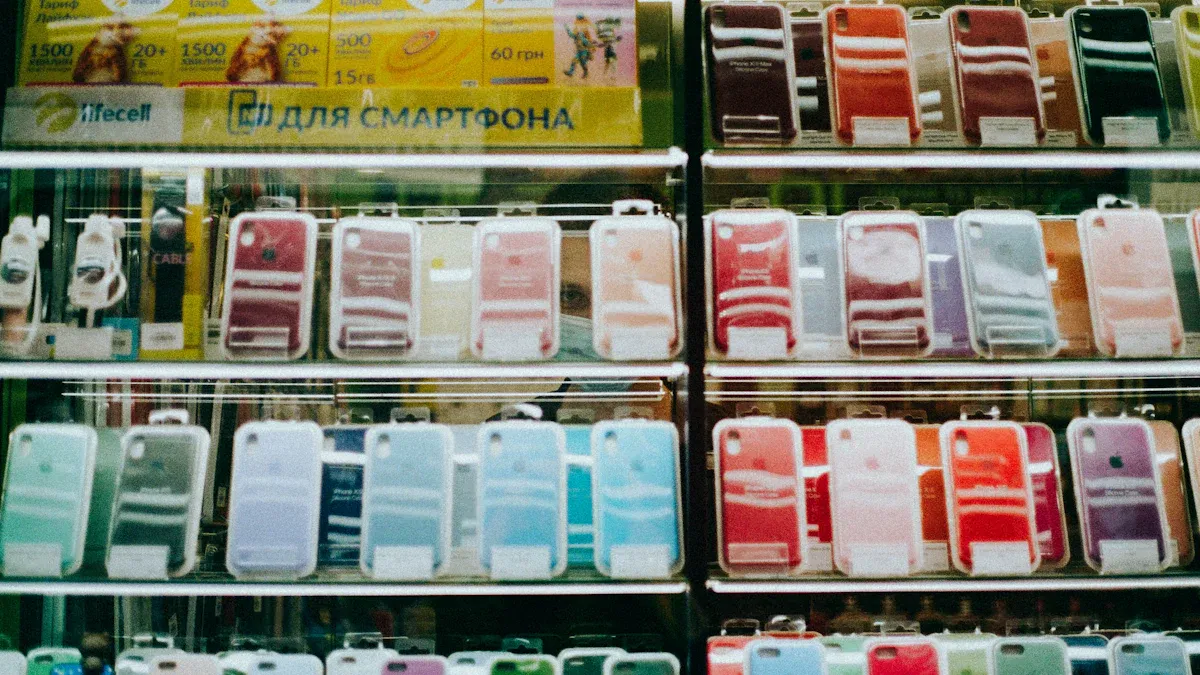
The US market drives rapid change in the phone case business. Market analysts estimate the current value of the mobile accessory sector at over USD 27 billion, with projections showing strong growth through 2032.
- Recent reports highlight a compound annual growth rate above 8%, fueled by rising smartphone ownership and frequent upgrades.
- Demand for stylish, protective cases continues to climb as consumers seek both fashion and function.
- Competition intensifies as businesses respond to evolving trends and consumer expectations.
Key Takeaways
- The US phone case market is valued at over $27 billion and is expected to grow significantly by 2032.
- Smartphone ownership and frequent upgrades drive the demand for stylish and protective phone cases.
- Most smartphone users, about 75%, recognize the need for protective cases to prevent damage.
- Online shopping dominates the phone case market, with 54% of consumers preferring to buy cases online.
- Customization and eco-friendly materials are key trends that attract modern consumers.
- Trade-in programs encourage consumers to upgrade devices, increasing the need for new phone cases.
- Businesses can boost sales by offering a variety of designs, materials, and smart features in their products.
- Counterfeit phone cases pose a risk; consumers should buy from reputable sources to ensure quality.
Market Overview
Market Size
The phone case market continues to expand in both the United States and globally. Recent market analysis shows that the global market value reached $25.7 billion in 2023. Projections estimate this figure will climb to $44.5 billion by 2033, with a compound annual growth rate (CAGR) of 5.64%. The US market plays a major role in this expansion, driven by high smartphone adoption and frequent device upgrades.
| Year | Global Market Value (USD) | CAGR (%) |
|---|---|---|
| 2023 | 25.7 Billion | N/A |
| 2033 | 44.5 Billion | 5.64 |
The secondary device market also grows as more consumers participate in mobile device trade-in programmes. In the first quarter of 2025, trade-in values for mobile devices in the US increased by 40% compared to the previous year. Consumers received $1.24 billion from mobile trade-in and upgrade programs during this period. The average age of devices being traded in reached a record high of 3.82 years. These trends show that the secondary device market and mobile trade-in volumes now play a key role in shaping the phone case business.
Growth Trends
The US smartphone market has seen steady growth over the past decade. In 2020, the smartphone market value stood at $714 billion. By 2026, projections suggest this value will reach $1,352 billion. This growth fuels demand for phone cases and related accessories.
| Year | Smartphone Market Value (USD) | Projected Value (USD) |
|---|---|---|
| 2020 | 714 Billion | |
| 2026 | 1,352 Billion |
- Nearly all smartphone users choose to protect their devices with a case.
- Many consumers replace their phone cases even if they do not upgrade their phones.
- The demand for phone cases rises as more people own multiple devices and as the population grows.
Trade-in programmes and mobile trade-in options encourage consumers to upgrade their devices more often. This trend increases the need for new phone cases and accessories. The secondary device market also benefits from these changes, as older devices enter new hands and require fresh protection.
Smartphone Market Impact
The smartphone industry drives the phone case market. As smartphone sales rise, so does the demand for cases. Data shows that 82% of smartphone users purchase a case when they acquire a new device. About 40% of Americans replace their phone accessories every six months. The projected value of the mobile phone case industry will reach $41.4 billion by 2030.
| Statistic | Value |
|---|---|
| Percentage of smartphone users purchasing cases at acquisition | 82% |
| Americans replacing phone accessories every six months | 40% |
| Projected value of mobile phone case industry by 2030 | $41.4 billion |
The smartphone market also impacts the secondary device market. As more people trade in their old phones, the need for cases for both new and used devices increases. Retailers see higher profit margins as trade-in programmes and mobile trade-in options become more popular. The competition in the phone case market remains strong, with businesses seeking ways to stand out and capture a share of this growing industry.
Note: The growth of the phone case market links closely to trends in the smartphone industry, trade-in programmes, and the expanding secondary device market. Businesses that understand these connections can better position themselves for success.
Consumer Demand
Need for Phone Cases
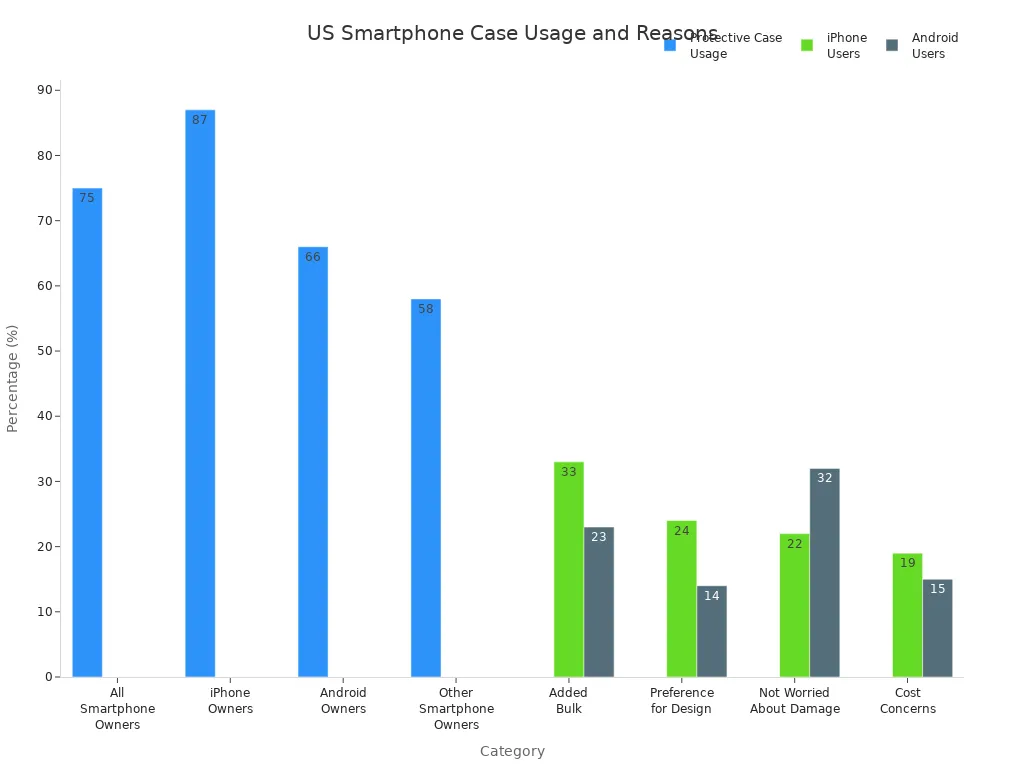
The US market shows strong demand for mobile phone cases. Most smartphone owners recognize the need for phone cases to protect their devices from damage. Market analysis reveals that 75% of all smartphone owners use protective cases. Among iPhone owners, the percentage rises to 87%. Android owners show a lower rate at 66%, while other smartphone users reach 58%. The smartphone industry continues to influence these numbers as new models enter the market and sales increase.
| Smartphone Type | Percentage Using Protective Cases |
|---|---|
| All Smartphone Owners | 75% |
| iPhone Owners | 87% |
| Android Owners | 66% |
| Other Smartphone Owners | 58% |
Consumers cite several reasons for not using a case. Some dislike the added bulk, while others prefer the original design of their phone. Cost concerns and a lack of worry about damage also play roles. The table below highlights these reasons for both iPhone and Android users.
| Reason | iPhone Users (%) | Android Users (%) |
|---|---|---|
| Added Bulk | 33% | 23% |
| Preference for Design | 24% | 14% |
| Not Worried About Damage | 22% | 32% |
| Cost Concerns | 19% | 15% |
The smartphone market continues to grow, and so does the need for phone cases. As mobile sales rise, more consumers seek protection for their devices. The secondary market also benefits, as trade-in programs encourage users to upgrade and purchase new cases.
Buying Behaviors
Consumers in the US display distinct buying behaviors when shopping for mobile phone cases. The market favors online shopping, with 54% of Americans choosing to buy cases through digital channels. In-person shopping remains popular for 24% of consumers, while 20% use a mix of both online and offline options.
- 54% shop online for phone cases
- 24% prefer in-person shopping
- 20% use both online and offline channels
The smartphone industry influences these behaviors. New phone releases and trade-in programs drive sales spikes, especially during upgrade cycles. Consumers often look for cases that match their style, offer protection, and fit the latest smartphone models. The demand for customization and smart features continues to grow as the market evolves.
Upgrade Cycles
Upgrade cycles play a major role in shaping consumer demand for mobile phone cases. US consumers replace or upgrade their cases frequently. The rise in smartphone adoption shortens replacement cycles, prompting users to seek new cases for upgraded devices. Increased awareness of device protection and high repair costs drive the need for phone cases. Advancements in materials, such as shock-absorbent polymers, and customizable designs attract more buyers.
Many consumers view phone cases as fashion accessories. Millennials, in particular, choose cases that reflect their personal style. The market also responds to the growing trend toward sustainability. Eco-friendly options gain popularity as consumers become more aware of environmental impacts.
Trade-in programs influence upgrade cycles. When consumers trade in their old phones, they often purchase new cases for their upgraded devices. The smartphone market continues to expand, and sales of mobile phone cases rise alongside it. Market analysis shows that smartphone demand growth leads to more frequent case replacements and higher overall sales.
Tip: Businesses can boost sales by offering a wide range of case designs, materials, and eco-friendly options to meet changing consumer preferences.
Business Competition
Profitability
Phone case businesses in the US enjoy strong profit margins. On average, these businesses see a profit margin of about 40%. This high margin attracts many new brands to the market. Profit margins can change based on product type, quality, store size, and the level of competition for smartphone cases. Many companies focus on premium cases or unique designs to keep their profits high. The smartphone market continues to grow, which helps maintain steady sales and supports business growth.
- Average profit margin: 40%
- Margins vary by product, quality, and store size
- High margins attract new brands
Note: Businesses that monitor market analysis and adjust their product mix often see better results in the competitive phone case market.
Differentiation
Standing out in the crowded phone case market requires creative strategies. Many brands target eco-conscious consumers by offering custom cases made from sustainable materials. Some companies cater to buyers who want ethically sourced and eco-friendly products. Others use 3D printing technology to create highly customized phone cases. This allows users to pick unique designs, colors, and materials.
Brands also offer cases made from biodegradable, recyclable, or other sustainable materials to meet the growing demand for eco-friendly options. Some companies use AI-powered tools to improve the customization process. These tools help predict popular trends in phone accessories and guide product development.
- Target eco-conscious consumers with sustainable materials
- Use 3D printing for custom designs
- Offer biodegradable and recyclable cases
- Employ AI to predict trends and enhance customization
The smartphone industry pushes brands to innovate. As the mobile market expands, companies must find new ways to attract customers and keep up with changing tastes.
E-commerce
The rise of e-commerce platforms has changed how phone cases reach consumers. Online shopping gives buyers easy access to a wide range of products. Many shoppers enjoy the convenience of same-day delivery and the ability to customize their cases online. E-commerce has led to a big increase in phone case sales in the US market.
The smartphone market benefits from this shift. As more people buy smartphones, the demand for phone cases grows. E-commerce platforms help businesses reach new customers and respond quickly to trends. The secondary market for mobile devices also grows as trade-in programs become more popular, creating more opportunities for sales.
Tip: Businesses that invest in strong online stores and fast delivery options often see higher sales and better customer loyalty.
Case Innovation
Materials
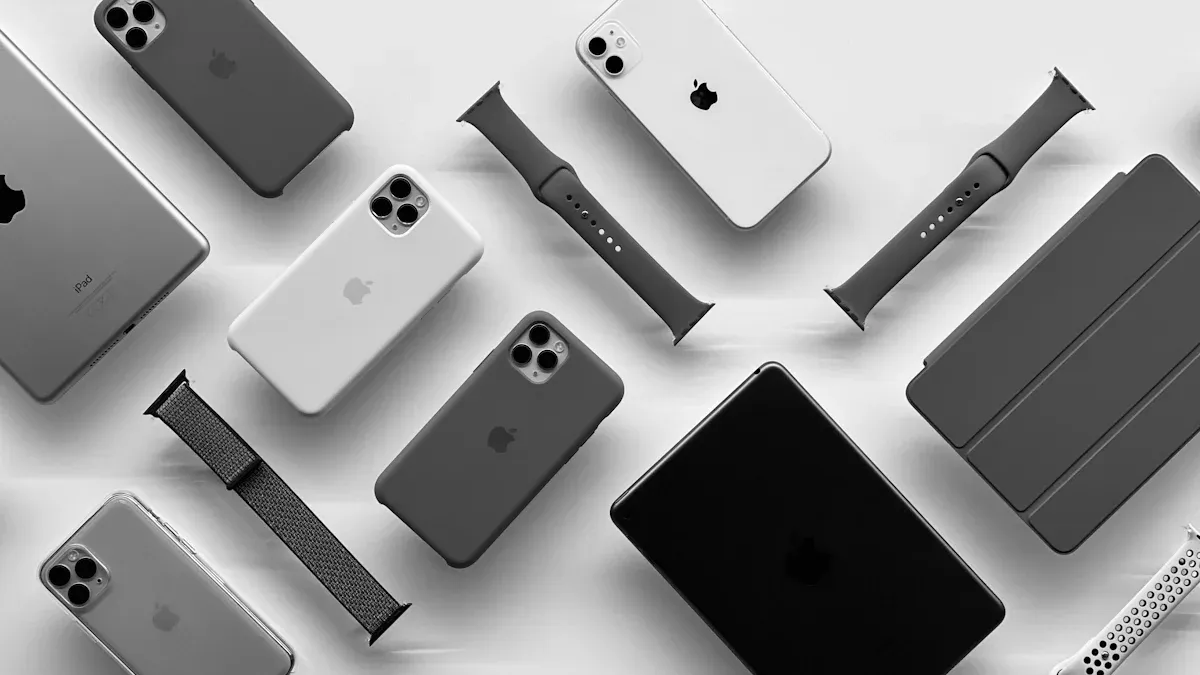
Manufacturers in the US market continue to develop new materials for phone cases. They focus on durability and design to meet the needs of smartphone users. Many companies now use embedded designs that prevent peeling, chipping, and fading. This approach allows for intricate and vibrant patterns that last longer. Scratch-resistant surfaces protect mobile devices from daily wear and tear. These features help cases maintain their aesthetic appeal over time.
Production efficiency has improved with advanced materials. Businesses can reduce costs and offer more design options. Integration with smart technology also opens new possibilities. Some cases now support dynamic design changes and interactive features. The table below highlights how these innovations impact durability and design.
| Feature | Impact on Durability | Impact on Design |
|---|---|---|
| Embedded Design | Prevents peeling, chipping, and fading | Allows for intricate and vibrant designs |
| Scratch Resistance | Highly resistant to scratches and abrasions | Maintains aesthetic appeal over time |
| Production Efficiency | Reduces costs and enhances production | Offers versatility in design options |
| Integration with Smart Tech | Potential for dynamic design changes | Enables interactive and customizable cases |
Smart Features
The smartphone market pushes companies to add smart features to phone cases. Some cases now include wireless charging support, LED notifications, and NFC technology. These features improve the user experience and add value to mobile accessories. Businesses compete by offering cases that work with the latest smartphone models and trade-in programs.
Smart cases can connect with mobile devices to display notifications or track usage. This innovation appeals to tech-savvy consumers who want more than basic protection. The market responds quickly to new smartphone releases, and companies race to offer compatible smart features. Competition in this area remains strong as brands seek to stand out.
Tip: Smart features in phone cases often increase customer satisfaction and encourage repeat purchases.
Customization
Customization has become a major trend in the US phone case market. Consumers want accessories that reflect their personal style. Case Station and other brands offer options to add designs, photos, or text to cases. Customers can choose unique patterns, personalize with names or initials, and select themed designs for holidays.
The demand for customizable phone cases remains high. Market analysis shows that these products are evergreen and attract steady interest. Popular customization options include:
- Unique designs
- Personalization with names or initials
- Themed designs for holidays
Many consumers value the ability to create a one-of-a-kind accessory. Customization enhances the perceived value of the product and helps businesses reach niche segments. Companies that offer a wide range of options often see increased sales and customer loyalty.
- Customization options are increasingly popular due to the desire for personalization.
- Unique designs, names, initials, or art appeal to niche segments.
- These options enhance the perceived value of the products.
The smartphone market continues to drive innovation in customization. As mobile devices evolve, so do the possibilities for personalized cases. Trade-in programs also encourage consumers to update their accessories, fueling ongoing demand.
Sustainability

Eco Materials
US consumers show growing interest in eco-friendly phone cases. Many people understand that their choices affect the environment. They know that the extraction and processing of materials for phone cases, especially plastic, can cause pollution and climate change. Manufacturing often uses chemicals and energy that increase greenhouse gas emissions. Disposal of old phone cases creates problems because many end up in landfills, harming the environment for years.
People now look for phone cases made from recycled or biodegradable materials. Ethical consumerism encourages buyers to think about the full lifecycle of a product, from material extraction to disposal. Many shoppers want to support brands that use sustainable materials and responsible production methods. The market responds by offering more eco-friendly options for smartphone users.
Tip: Choosing a phone case made from recycled or biodegradable materials helps reduce pollution and supports a healthier planet.
Regulations
US regulations guide the use of eco-friendly materials in phone case production. These rules help protect the environment and encourage responsible manufacturing. Key regulations include:
- Restriction of Hazardous Substances (RoHS): Limits the use of certain hazardous materials in electronic products, including phone cases, to ensure they are safe and eco-friendly.
- Electronic Product Recycling and Management Act (EPRMA): Promotes recycling and responsible management of electronic products, supporting the use of sustainable materials.
Manufacturers must follow these regulations to sell phone cases in the US market. These rules help keep harmful substances out of mobile accessories and encourage recycling. Companies that meet these standards can attract more environmentally conscious smartphone users.
Production Challenges
Scaling sustainable production presents several challenges for US phone case manufacturers. Sourcing eco-friendly materials can be difficult, especially when demand rises. Managing supply chains requires careful planning to ensure materials arrive on time and meet quality standards. Quality control becomes more complex with new materials, as manufacturers must test for durability and safety.
Balancing customization with production efficiency also creates obstacles. Many consumers want personalized phone cases, but custom designs can slow down production. Navigating production timelines and lead times adds pressure, especially when the market expects fast delivery for mobile accessories.
| Challenge | Impact on Production |
|---|---|
| Sourcing materials responsibly | May slow down manufacturing |
| Managing supply chains | Can cause delays and shortages |
| Ensuring quality control | Requires extra testing and oversight |
| Balancing customization | May reduce efficiency |
| Navigating timelines and lead times | Increases pressure on manufacturers |
Manufacturers must address these challenges to meet the growing demand for sustainable phone cases. Success in this area can help companies stand out in the competitive smartphone market.
Opportunities and Challenges
Niche Markets
The US phone case industry continues to see strong growth in niche markets. Eco-friendly materials, smart features, and customization stand out as key areas. Many consumers now prefer sustainable products. This shift pushes companies to develop and market cases made from recycled or biodegradable materials. Millennials and Gen Z lead the demand for premium phone cases that combine style with durability. They want products that protect their devices and reflect their personal taste.
Innovative technology also shapes the market. Some brands now offer IoT-enabled cases with features like location tracking and device health monitoring. These smart cases appeal to tech-savvy buyers who want more than basic protection. The growing interest in customization allows customers to design cases that match their style or needs. This trend creates new opportunities for business owners who can offer unique or personalized products.
The US phone case market is expected to grow by USD 15.5 billion from 2024 to 2029, with a CAGR of 7.1%. Companies that focus on emerging trends and consumer preferences can benefit from this growth.
Supply Chain
Supply chain issues present ongoing challenges for phone case manufacturers and retailers. Disruptions can delay production and reduce the availability of phone cases in stores and online. When raw materials become scarce, suppliers may struggle to meet demand. This shortage can push up prices for both businesses and consumers.
- Delays in production affect the availability of phone cases.
- Increased costs often lead to higher prices for buyers.
- Raw material shortages can limit product options.
- Logistics and transportation problems may prevent timely delivery.
Manufacturers must plan carefully to avoid these problems. They often look for new suppliers or adjust their inventory to keep up with changes in the mobile accessory market. Quick responses to supply chain disruptions help companies maintain customer trust and keep products on shelves.
Counterfeits
Counterfeit phone cases remain a serious problem in the US market. Fake products often look similar to genuine ones but use lower-quality materials. These cases may not protect smartphones as well as authentic versions. Counterfeits can damage a brand’s reputation and lead to lost sales for legitimate businesses.
Retailers and manufacturers use several strategies to fight counterfeits. They may add unique serial numbers, holograms, or QR codes to their products. Some companies educate customers about how to spot fake phone accessories. Strong partnerships with trusted distributors also help reduce the risk of counterfeit goods entering the market.
Consumers should buy phone cases from reputable sources to ensure they receive quality products that protect their mobile devices.
Future Outlook
Trends
The US phone case industry will see several important trends in the next decade. Consumers want products that match their values and lifestyles. Many buyers now look for eco-friendly phone cases. Brands like OtterBox and Pela Case use recycled and biodegradable materials to meet this demand. Personalization also stands out as a top trend. Companies such as Casetify let customers design unique cases with their own images or text.
- Eco-friendly phone cases are becoming more popular.
- Customization and personalization attract more buyers.
- Premium and rugged cases appeal to people who want extra protection.
- Smart cases with IoT features interest tech-savvy and health-conscious consumers.
The market will continue to grow as these trends shape what buyers expect from their phone accessories.
New Entrants
New companies enter the US phone case market every year. These businesses bring fresh ideas and challenge established brands. Many focus on innovation, customization, and sustainability. Some startups use advanced materials to create durable and stylish phone cases. Others offer smart features, such as wireless charging or health tracking.
Established brands like Case-Mate and Mous respond by improving their own products. They add new designs and use eco-friendly materials. Lifeproof and OtterBox focus on rugged cases for people with active lifestyles. Social media drives the trend for personalized cases, pushing brands like CASETiFY to offer more options.
Note: New entrants often succeed by targeting niche groups or offering unique features that set them apart in the smartphone market.
Insights
Experts predict steady growth for the US phone case market. The market could reach $50.0 billion by 2033, up from $30.0 billion in 2024. This growth comes from changing consumer preferences, new technology, and stricter regulations. The table below highlights key insights about the future of the industry.
| Key Insights | Description |
|---|---|
| Market Growth | The US phone case market is projected to grow steadily, driven by demand for premium and personalized cases. |
| Consumer Trends | There is a rising preference for eco-friendly products and technological innovations in phone cases. |
| Competitive Landscape | Major players like OtterBox and Spigen dominate, while innovative startups are entering the market with smart solutions. |
| Regulatory Challenges | The market faces hurdles from regulatory changes regarding material safety and environmental policies. |
| Technological Innovations | Integration of IoT features and advancements in materials are enhancing user engagement and brand differentiation. |
| Regional Performance | The US market shows steady expansion, particularly in urban centers, driven by premiumization and smartphone adoption. |
The future looks bright for the phone case industry. Companies that focus on sustainability, technology, and personalization will likely lead the market. As the smartphone market grows, so does the need for new and innovative mobile accessories.
The US market drives innovation in the phone case industry as smartphone technology advances and consumer preferences shift. Recent research shows magnetic phone cases gain popularity for their convenience and compatibility. Businesses can succeed by using online tools, exploring popular designs, and building a strong brand identity. Companies that offer unique products and use sustainable materials stand out. The future promises more opportunities as e-commerce expands and demand for versatile phone accessories grows.
FAQ
What materials do most US phone cases use?
Most phone cases in the US use plastic, silicone, or TPU. Some brands offer cases made from recycled or biodegradable materials. These options help reduce environmental impact and appeal to eco-conscious buyers.
How often do people replace their phone cases?
Many Americans replace their phone cases every six to twelve months. New phone models, changing styles, and wear and tear drive this trend. Frequent upgrades also increase demand for new cases.
Are eco-friendly phone cases as durable as regular ones?
Eco-friendly phone cases can match the durability of traditional cases. Brands use advanced materials like plant-based plastics and recycled polymers. These cases protect devices while supporting sustainability.
What features do smart phone cases offer?
Smart phone cases may include wireless charging, LED notifications, or NFC technology. Some cases track device health or location. These features add convenience and appeal to tech-savvy users.
How can buyers spot counterfeit phone cases?
Buyers should check for official branding, serial numbers, or QR codes. Purchasing from reputable retailers helps avoid fakes. Counterfeit cases often use low-quality materials and may not fit devices properly.
Why do consumers prefer customized phone cases?
Consumers enjoy expressing their style with personalized designs. Custom cases allow users to add photos, names, or unique patterns. This trend makes phone accessories more meaningful and unique.
What should businesses consider when selling phone cases online?
Businesses should offer a wide selection, fast shipping, and easy customization. Clear product descriptions and quality images help attract buyers. Good customer service builds trust and encourages repeat purchases.
Do regulations affect phone case manufacturing in the US?
Yes, US regulations like RoHS and EPRMA set safety and environmental standards. Manufacturers must follow these rules to sell cases in the US. Compliance ensures safer products and supports sustainability goals.


 English
 Arabic
 Chinese (Simplified)
 Dutch
Dutch French
 German
 Italian
 Portuguese
 Russian
 Spanish